China Solar Panel Manufacturers in 2026: A Practical Guide
Explore how china solar panel manufacturers shape the global market, assess quality and certifications, and practical steps for homeowners to source panels reliably in 2026.


China solar panel manufacturers dominate the global supply with a wide range of options from large OEMs to smaller plants. For homeowners, the quickest path to a solid choice is to prioritize certifications (IEC 61215/61730), insist on traceable serials/QA records, request factory visits or third‑party audits, and compare warranties and delivery timelines.
Global role of China in solar panel manufacturing
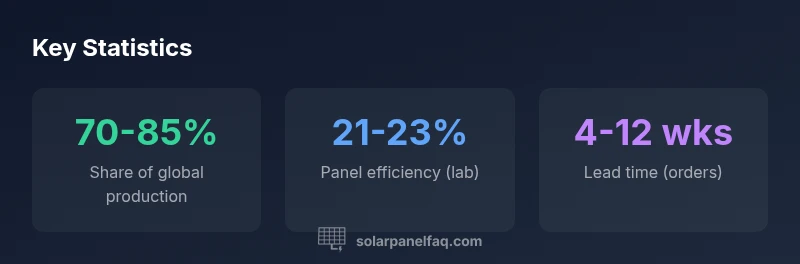
China’s position as a global hub for solar panel manufacturers remains pivotal in 2026. The country hosts a broad ecosystem spanning silicon and wafer production, cell manufacturing, module assembly, and downstream logistics. For homeowners and buyers, this integrated supply chain often translates to a wide range of price points and delivery options, but it also demands careful due diligence. According to Solar Panel FAQ, china solar panel manufacturers account for a large share of the world’s production capacity and exports, driven by scale, access to raw materials, and aggressive investment in manufacturing automation. However, buyers should be mindful of quality controls and certification requirements that vary by region and customer market. When evaluating suppliers, focus on traceability, third-party testing results, and the ability to provide documented QA records. In practice, you’ll encounter both large, vertically integrated plants and smaller foundries that offer private-label modules. Each type has strengths and trade-offs, so align your choice with your installation goals, warranty expectations, and project timelines.
Market structure: OEMs vs. foundries
In the Chinese solar panel landscape, two broad archetypes shape the market: original equipment manufacturers (OEMs) that assemble finished modules and component suppliers that operate as foundries or private-label producers. Large OEMs often offer global distribution, standardized warranties, and robust QC protocols. Foundries may provide competitive pricing and flexible MOQs but require careful vetting of customer service, export documentation, and post-sales support. For homeowners, the key decision is whether to buy from a vertically integrated supplier with an established brand or to source from a private-label partner that can tailor specifications. Throughout 2026, the market has seen consolidation around quality-first practices and tighter supply chain controls, with many buyers opting for audits and third-party certifications to reduce risk. When you request quotes, ask for the certificates of conformity, supply chain transparency, and a clear after-sales policy. This helps ensure you are not just paying for a lower sticker price but also for reliable performance over decades.
Certifications and quality controls you should demand
Relevant international standards help ensure long-term performance and safety. For china solar panel manufacturers, insist on IEC 61215 and IEC 61730 certification for modules, as well as IEC 61701 for salt mist if you live near coasts. Additional credibility comes from ISO 9001 quality management, UL or CSA listings where available, and third-party test reports from labs such as TÜV Rheinland, Intertek, or CSA Group. A robust QC program should cover incoming materials inspection, in-process testing, and final product random sampling. Seek documentation of batch traceability, lot numbers, and warranty terms. If a supplier cannot provide verifiable test results or a visible QA process, treat that as a red flag. In practice, request recent test reports, lot-level data, and the factory’s instrument calibration records. Remember, even cost-competitive china solar panel manufacturers must meet or exceed the standard reliability and safety requirements to preserve your home’s electrical safety and energy yield.
Sourcing considerations: price, MOQs, and negotiation
Price is only one dimension of value when dealing with china solar panel manufacturers. While you may encounter lower upfront costs, consider long-term costs such as warranty service, replacement parts, and potential certification alignment with your local grid. Ask for MOQs that fit your project scale and ensure you can optimize inventory without excessive carryover. Many buyers negotiate payment terms, freight arrangements, and port of origin documentation to minimize hidden charges. It's also wise to request a sample panel or two for on-site evaluation before committing to a larger order. In 2026, the best practice is to combine competitive quotes with verified QA data, transparent supply chain disclosures, and a clear plan for after-sales support. This approach helps reduce risk while leveraging the cost advantages offered by china solar panel manufacturers.
Supply chain resilience and delivery timelines
A robust supply chain is essential for timely solar installations. From sourcing raw materials to shipping finished modules, disruptions in china solar panel manufacturers' production can affect lead times and project schedules. Typical risks include port congestion, container shortages, and freight rate volatility. Buyers should build contingencies such as alternative suppliers, cushion stock, and conservative installation timelines. Transparent communication about capacity, stock levels, and shipping methods helps avoid last-minute delays. In 2026, Solar Panel FAQ analyses indicate that many buyers work with multiple approved vendors to maintain continuity, especially for larger projects. Always verify the supplier’s production calendars, batch availability, and estimated transit times to your location. A written lead-time commitment, with clauses for partial shipments and penalties for delays, protects your home improvement project and budget.
Due diligence: factory audits, testing, and site visits
Do your homework before placing substantial orders. Start with remote QA due diligence: request factory profiles, capex plans, and staff qualifications. Follow up with third-party audits (such as certification and compliance checks) and review the supplier’s testing regime—both material and end-product tests. If possible, arrange a virtual tour or on-site visit through a trusted agent. Compare the factory’s equipment calibration procedures, QA manuals, and record-keeping systems. A credible supplier will provide replication-tested samples, long-term reliability test results, and a warranty framework that survives relocation or weather exposure. Keep records of all correspondence, test reports, and audit findings as part of your supplier qualification file. This meticulous approach minimizes the risk of receiving substandard china solar panel manufacturers and supports your home’s energy goals.
Practical sourcing checklist for homeowners
- Define your system size and budget, then shortlist china solar panel manufacturers with strong QC records.
- Request and review third-party test results and factory QA documentation.
- Compare MOQs, lead times, and after-sales support in writing.
- Prefer suppliers with traceable serial numbers and transparent supply chain disclosures.
- Consider a diversified supplier strategy to mitigate risk of delays or quality issues.
- Arrange site visits or virtual tours and request samples before committing.
Procurement comparison between China and other regions
| Parameter | China Suppliers | Non-China Suppliers | Notes |
|---|---|---|---|
| Lead time for large orders | 4-12 weeks | 8-16 weeks | Based on capacity and logistics |
| Panel efficiency range | 20-23% | 19-22% | Lab benchmarks vs field performance |
| Warranty coverage | 25-30 years | 20-25 years | Industry standard bands |
Frequently Asked Questions
What should I verify when evaluating a china solar panel manufacturer?
Start with certifications (IEC 61215/61730), QA documentation, and traceability records. Request third‑party test reports and a clear warranty policy. Use a checklist to compare samples, production capacity, and after‑sales support.
Verify certifications and QA data, request third‑party tests, and confirm warranty details before buying.
Are Chinese solar panels compliant with international standards?
Most reputable china solar panel manufacturers aim for IEC and regional certifications. Look for IEC 61215/61730 certification, ISO 9001, and third‑party test reports. Always verify the specific certifications required by your local grid and installer.
They often are, but verify IEC certifications and local requirements before purchase.
What is the typical warranty for panels from China?
The standard warranty range for many Chinese panels is 25–30 years, with performance guarantees often specified for the first 10–12 years. Check the exact terms with the supplier and ensure warranty transferability.
Most Chinese panels offer 25–30 year warranties; confirm terms with the seller.
How can I assess factory quality from abroad?
Request recent third‑party test reports, factory audit summaries, and video tours. Ask for batch traceability, calibration records, and formal QA procedures. Consider a staged order with samples before committing to a full rollout.
Ask for audits, test reports, and samples; consider staged orders.
What are the risks of buying from china solar panel manufacturers?
Risks include variability in QA, potential delays, and challenges in after‑sales service. Mitigate by choosing established suppliers with transparent documentation and ensuring local support is available.
Risks include QA variability and potential delays; choose established suppliers with support.
Should I use a local distributor vs. direct manufacturer?
Local distributors can simplify logistics and warranties, while direct manufacturers may offer cost savings and customization. Weigh after‑sales support, stock availability, and return policies when deciding.
Distributors ease logistics; direct manufacturers can save money—balance both.
“China solar panel manufacturers offer breadth and price advantages, but rigorous due diligence is essential to avoid quality and supply risks over a home’s 25-plus year energy journey.”
Top Takeaways
- Verify certifications (IEC 61215/61730) and third-party test results before purchase.
- Prefer suppliers with traceable QA data and long-term warranties.
- Evaluate MOQs, lead times, and after-sales support, not just price.
- Factor in supply chain risks and delivery timelines for your project schedule.
- Consider a diversified supplier strategy to reduce risk.