AC Solar Panel: How It Works, Pros, and Installation Guide
Explore AC solar panels, how they differ from traditional DC modules, installation considerations, safety, and potential energy savings for homeowners. Learn sizing, wiring options, warranties, and whether an AC module fits your roof, budget, and goals.


An AC solar panel is a PV module with built-in power conversion, producing AC electricity directly. This guide explains how it differs from conventional DC panels, what to consider when sizing and wiring, and the practical pros and cons for homes. By the end, you’ll know whether an AC module fits your roof, budget, and goals.
What is an AC solar panel and how it differs from traditional DC modules
AC solar panels are photovoltaic modules with integrated in-panel power conversion, meaning the inverter stage is built into the panel itself. This arrangement lets the panel output AC power directly, reducing the amount of high-voltage DC cabling that normally runs from the array to a central inverter. According to Solar Panel FAQ, AC solar panel designs place the conversion at the panel level, which can simplify roof wiring and monitoring for homeowners. In practice, this means fewer bulky components on the roof and a more compact configuration overall, though it does not eliminate the need for a properly sized service panel and a compliant interconnection with the utility. For many homes, the choice between AC modules and traditional DC modules hinges on roof layout, shading patterns, budget, and compatibility with energy storage. You’ll also want to understand warranty differences, and how panel-level conversion interacts with existing electrical codes and safety devices. This section lays the foundation for a clear comparison so you can choose confidently and avoid common pitfalls.
How AC modules affect inverter wiring and grid interconnection
When you opt for AC solar panels, the inverter function effectively moves closer to the source, either inside each panel or in a nearby module assembly. This can simplify roof wiring because there is less DC wiring running from the roof to a ground-mounted or attic inverter. The system still connects to your main electrical panel and to the grid, but the interconnection approach may differ from DC-only configurations. You’ll typically encounter standard household AC voltages and frequencies, and you’ll still need a code-compliant disconnect and overcurrent protection at the service panel. If you plan to incorporate energy storage or smart grid features, verify compatibility with the storage device and the utility’s interconnection requirements. Net metering policies remain a critical consideration, and the local utility will guide the exact interconnection steps. In short, the AC module path can simplify some wiring challenges while introducing new questions about warranties, service, and compatibility with other components.
Sizing, roof suitability, and compatibility
Sizing an AC solar panel system begins with your energy goals, roof area, and electrical panel capacity. Because the inverter is integrated at the panel level, the design emphasis shifts toward module count, roof exposure, and shading patterns rather than the inverter count alone. Roof suitability matters: a strong, well-ventilated mounting surface, structural integrity to support the panels, and minimal shading during peak sun hours maximize performance. Compatibility with existing service equipment is essential; some roofs may require upgrades to the electrical panel or new disconnects. If you have existing storage or a microgrid strategy, verify whether the AC modules will work with the chosen storage technology and how they will coordinate with the utility. A well-planned layout reduces bottlenecks and helps ensure that the system will deliver the anticipated energy when you need it most.
Installation considerations: mounting, wiring, and permits
Installation of AC solar panels requires careful coordination among the roofer, electrician, and interconnection authority. Start with a design that specifies module count, mounting hardware, wiring routes, and clearances from edges and penetrations. Permitting typically involves building permits and utility interconnection approval, which can take time depending on your location. A licensed electrician should handle all electrical work in accordance with local codes and the National Electrical Code (NEC). Expect inspections at multiple stages: framing, wiring, and final commissioning. Weatherproofing, sealants, and proper torque on mounting hardware are essential to prevent leaks and corrosion. By preparing a thorough plan and hiring qualified professionals, you reduce risk and improve the likelihood of a smooth, compliant install.
Performance and efficiency: understanding AC conversion losses
AC modules provide conversion at the panel, which can mitigate some mismatch losses seen with string inverters. Because each panel operates with its own inverter, shading on one panel does not drag down others in the same way as a traditional string layout might. However, every module includes its own conversion stage, which means thermal management and reliability considerations are important. The overall efficiency depends on the quality of the panel, the inverter electronics, and how well the system is integrated with the rest of the home electrical system. In real-world terms, expect steady performance improvements under partial shading and more predictable performance across different roof orientations. Consulting with an installer who understands module-level optimization will help you maximize output in your specific climate and roof geometry.
Costs, financing, and payback potential
Upfront costs for AC solar panels can be higher than conventional DC installations because of the integrated inverter in each module. The economics, however, can be favorable in certain roof layouts or when aiming to minimize high-voltage wiring and on-roof equipment. Financing options, incentives, and local utility programs vary widely by region. A key step is to obtain multiple quotes that itemize equipment, permits, installation, and any storage or smart-grid components. Even without exact price figures in this guide, you can compare the total installed cost against expected energy savings to estimate payback. Solar Panel FAQ analysis shows that homeowner savings depend strongly on local solar irradiance, energy rates, and available incentives. Always request a full, written quote and ask about warranty coverage and service terms.
Safety, codes, and electrical standards
Safety and code compliance are non-negotiable for AC solar panels. Ensure all components meet NEC requirements and local electrical codes, and verify that the system has appropriate overcurrent protection and disconnects. Panel-level inverters must be installed by qualified personnel, with careful attention to grounding and bonding practices. Utilities may require specific interconnection agreements or metering configurations, so involve the utility early in the planning process. Proper labeling, accessible shutoffs, and clear maintenance instructions help keep your system safe for occupants and service technicians. By adhering to standards and working with licensed professionals, you reduce the risk of noncompliance and safety incidents.
Maintenance, warranties, and lifespan
Maintenance for AC solar panels is similar in frequency to DC installations: periodic cleaning to remove dust and debris, inspection for loose hardware, and checking electrical connections. Warranties for AC modules can vary by manufacturer, covering module electronics and in some cases performance. Because each panel contains inverter circuitry, some warranties spread across many components and require careful review for coverage scope. Track performance data over time and compare it to projected output to catch issues early. If a failure occurs, having a local technician with experience in AC module systems will speed diagnostics and resolution.
Decision guide: should you choose an AC module?
If you want simpler roof wiring, faster on-roof wiring, and easier integration with certain storage or smart-grid setups, an AC solar panel can be compelling. Favor AC modules when your roof layout includes shading challenges that affect a traditional string or microinverter approach, or when you prefer module-level isolation and diagnostics. You might reconsider if you require the very highest efficiency with a single, centralized inverter or if your storage strategy demands a tightly integrated DC-to-AC chain. Use a structured decision checklist: roof exposure, shading patterns, existing service capacity, storage plans, and the availability of qualified installers. In the end, the choice should align with your energy goals, budget, and comfort with newer technology.
AUTHORITY SOURCES
- https://www.energy.gov/eere/solar
- https://www.nrel.gov
- https://www.energy.gov/eere/solar/articles/solar-power-systems-101
Tools & Materials
- Safety gear (goggles, gloves, and non-slip footwear)(ANSI Z87.1 compliant; wear when handling panels and tools)
- Roof mounting rails and clamps(Compatible with your chosen AC module system)
- AC-module with integrated inverter wiring kit(Includes grounding provisions and fusing per manufacturer)
- Conduit, exterior-rated cables, and weatherproof connectors(Use UV-rated, flame-retardant materials where required)
- MC4 or equivalent connectors(Weatherproof and compatible with module outputs)
- Electrical tester and digital multimeter(For voltage, continuity, and insulation checks)
- Torque wrench and sealant/caulk(Seal penetrations to prevent water intrusion)
- Permit documents and interconnection paperwork(Coordinate with local building and utility authorities)
Steps
Estimated time: 2-6 weeks (permit and utility coordination may extend timelines)
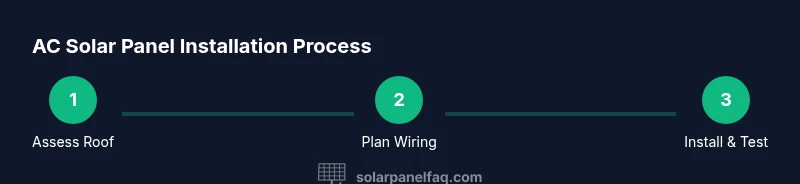
- 1
Assess roof and energy goals
Evaluate roof condition, sun exposure, and daily energy needs. Document shading across different times of day and year. This informs panel count and placement.
Tip: Take photos from multiple angles and create a simple diagram of desired module positions. - 2
Check codes and obtain permits
Review local electrical codes and initiate permits with your building department. Coordinate with utility interconnection requirements early to avoid delays.
Tip: Ask your installer about required inspections and expected timelines. - 3
Decide between AC modules vs conventional DC
Compare inverter strategies: panel-level inverters (AC modules) versus central controllers with DC modules. Consider warranties and future storage needs.
Tip: Request side-by-side quotes that detail warranties and service options. - 4
Design layout and select components
Draft a layout showing module counts, mounting locations, and wiring routes. Choose mounting hardware compatible with the AC module design.
Tip: Create a simple sketch to communicate your plan to the installer. - 5
Hire licensed professionals
Engage a licensed solar installer and an electrician for electrical work. Verify credentials and past project experience with AC-module systems.
Tip: Get multiple bids and check references before signing. - 6
Install mounting hardware and run wiring
Secure rails, mount panels, and route exterior-rated wiring. Ensure weatherproof seals at all penetrations and verify torque specs.
Tip: Avoid forcing connectors; align and click into place cleanly. - 7
Connect AC modules to the service panel
Attach the module outputs to the designated AC bus or disconnect per manufacturer instructions. Use proper overcurrent protection and grounding.
Tip: Double-check polarity and verify disconnection before testing. - 8
Commission and test the system
Power up, perform safety checks, and verify output under normal load. Confirm grid interconnection and monitoring data is visible.
Tip: Document test results and keep a copy of the warranty terms. - 9
Schedule maintenance and monitor performance
Set up regular inspections and performance monitoring. Track output against forecast and address deviations promptly.
Tip: Set alerts for underperformance to catch issues early.
Frequently Asked Questions
What is an AC solar panel and how does it differ from a traditional DC panel?
An AC solar panel includes an inverter inside the module, delivering AC power directly. Traditional panels provide DC power and require a separate inverter. This can simplify roof wiring but may affect warranty terms and compatibility with storage solutions.
An AC panel has the inverter built in, so it outputs AC on the roof. A traditional panel needs a separate inverter. The choice affects wiring and storage compatibility.
Are AC solar panels more expensive than DC setups?
AC modules can have higher upfront costs due to integrated electronics in each panel. Overall costs depend on roof layout, incentives, and the need for any additional equipment or storage.
AC panels may cost more at purchase, but the total cost depends on your roof and incentives.
Can all roofs support AC modules?
Most roofs can support AC modules if they are structurally sound and compatible with the mounting hardware. Some installations may require service panel upgrades or additional safety equipment.
Most roofs can support AC modules, but some may need panel upgrades.
Do AC modules affect warranties or service?
Warranties vary by manufacturer and may cover module electronics, inverter function, and system performance. Review each component’s warranty terms and how they interrelate.
Warranty terms vary; check what the manufacturer covers for AC modules.
What maintenance do AC solar panels require?
Maintenance is similar to DC systems: periodic cleaning, checking connections, and monitoring output. Because each panel contains electronics, ensure professional inspections for any signs of wear.
Maintenance is similar to other solar systems; keep an eye on connections and performance.
Is an AC solar panel right for homes with storage or smart-grid goals?
AC modules can pair well with storage and smart-grid strategies, but verify compatibility with the storage system and net-metering rules in your area.
They can fit storage and smart-grid goals if compatible with your storage system.
Watch Video
Top Takeaways
- AC modules place inversion at the panel level for simpler roof wiring.
- Site design should prioritize shading, layout, and service panel capacity.
- Permits, interconnection, and safety compliance are critical milestones.
- Warranty terms and maintenance influence long-term value.