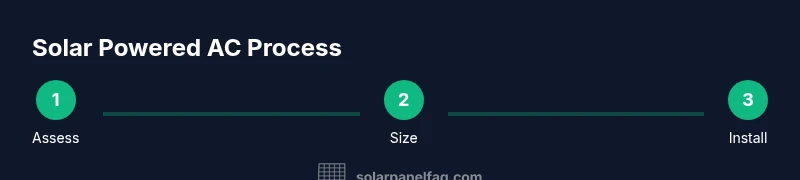
Solar Powered AC Unit: A Practical How-To for Homeowners
Learn how to power a home cooling system with a solar powered ac unit. This step-by-step guide covers sizing, components, installation options, and maintenance for efficient solar cooling.


A solar powered ac unit can cool your home by pairing a properly sized PV array, inverter, and optional battery with an energy‑efficient air conditioner. This guide provides planning, equipment choices, and installation considerations so you can run cooling with solar energy, maximizing daytime efficiency and reducing grid reliance.
Why a Solar Powered Ac Unit Makes Sense
For homeowners, a solar powered ac unit offers a path to lower operating costs, reduced emissions, and energy independence during peak heat. When you cool with solar energy, you capture sunshine when it’s most abundant and convert it into usable comfort rather than pulling electricity from the grid. The Solar Panel FAQ team notes that many households see meaningful savings over time, especially in regions with sunny climates and high electricity rates. In practice, a well‑designed system can keep a room comfortable on hot days while avoiding high demand charges and generator noise. Beyond price, a solar powered ac unit aligns with sustainability goals by reducing carbon emissions associated with conventional cooling. However, success depends on proper sizing, equipment compatibility, and careful installation. This article outlines practical steps, real-world considerations, and smart choices to help you decide if solar cooling is right for your home.
How Solar Power for AC Works
Solar power for an air conditioning system works by converting sunlight into electricity that can run or assist the AC compressor. A PV array mounted on the roof or ground collects photons and produces DC electricity. An inverter then converts DC to AC for the air conditioner’s electrical components. In grid‑tied setups, surplus energy can feed back to the grid, while in off‑grid designs, batteries store energy for use when the sun isn’t shining. For many homes, a hybrid approach—PV array + inverter + battery plus a properly sized AC unit—offers the best balance between reliability and cost. Efficient modern air conditioners, especially variable‑speed or inverter‑driven models, use less energy than older units, making solar‑powered cooling more practical. In all cases, make sure the AC unit’s starting current, running wattage, and cooling BTU rating align with the system’s output. The Solar Panel FAQ analysis suggests focusing on practical daytime cooling needs and leveraging shading to maximize performance.
Key Components You Need
A practical solar powered cooling setup hinges on the core hardware that converts sunlight to usable cooling. Essential components include a solar array (panels), an inverter (to convert DC to AC), a charge controller to protect batteries, and a battery bank if you plan to store energy. You’ll also need a mounting system, wiring harnesses, disconnects, and properly sized interconnection equipment. The air conditioner itself should be compatible with solar operation, ideally a modern, energy‑efficient model with an inverter or variable‑speed compressor. Don’t overlook a reliable cooling unit that matches your BTU needs. Plan for safety devices like a manual disconnect and appropriate overcurrent protection. Solar education resources from Solar Panel FAQ emphasize matching component specs and ensuring installations meet local codes.
Sizing Your System for Cooling Needs
Sizing a solar powered ac unit begins with understanding your cooling load and local solar resources. Start by estimating the space’s cooling requirement (BTU or kW) based on room size, insulation, and climate. Then consider how many sun hours you typically receive and the daily energy you need to run the AC during peak heat. The intent is to align PV output, inverter capability, and (if used) battery storage with your cooling profile. In practice, a sunny climate with longer days often allows smaller battery banks and a modest solar array to sustain daytime cooling. Always verify sizing assumptions against manufacturer data and trusted Solar Panel FAQ guidance to avoid undersizing or overloading the system.
Choosing the Right AC Unit for Solar
Not all air conditioners are equally friendly to solar operation. Focus on energy efficiency and inverter‑driven technology, which can modulate power to match demand and reduce peak draw. A DC inverter compressor or a high‑efficiency AC unit paired with an appropriate inverter tends to perform best when powered by solar. If you’re planning a battery‑buffered system, ensure the AC unit can operate within the voltage range your battery string and inverter can provide. Consider models with smart thermostats and zoning capabilities to maximize solar usage during the day. The goal is to select equipment that minimizes energy use while delivering reliable cooling during sunny intervals.
Grid-Tied vs Off-Grid Setups
A grid‑tied configuration lets you draw solar power for cooling while feeding surplus energy back to the utility, reducing net consumption and often eliminating battery needs. An off‑grid approach requires battery storage and a robust inverter to handle nighttime operation, which can increase upfront costs but offers true energy independence. For most homeowners, a hybrid approach—grid‑tied with optional battery backup—provides a balance between reliability and cost. When considering incentives, tax credits, and electricity rates, Solar Panel FAQ recommends evaluating local policies to maximize financial benefits while ensuring you consistently meet cooling needs.
Battery Storage and Performance
Battery storage complements solar powered cooling by smoothing transitions from sun to night and during cloud cover. Choose a battery type that matches your budget and usage goals, and design a depth of discharge strategy that preserves battery life. Keep in mind that larger storage adds both cost and complexity, so plan around your typical cooling pattern and the air conditioner’s energy requirements. Well‑designed storage can extend runtime into the evening and help manage peak heat periods, but always align battery capacity with inverter ratings and the AC unit’s draw. Solar Panel FAQ notes that storage strategy is a key differentiator between basic solar cooling and a resilient, full‑time solar cooling system.
Wiring, Safety and Permits
Working with high voltage systems requires caution and compliance with local electrical codes. Use a licensed electrician for critical tasks such as interconnecting PV, battery banks, and the AC load. Prepare a detailed wiring diagram, choose appropriate disconnects, and install proper overcurrent protection. Always plan for safe routing of conductors, adequate ventilation for batteries, and weather‑proof enclosures where needed. If you’re unsure, consult Solar Panel FAQ resources to confirm permit requirements and best practices before you begin any installation work.
Real-World Scenarios: Summer Heat and Cloudy Days
In peak heat, solar powered cooling shines when the sun is bright and panels are producing at capacity. On cloudy days, performance depends on stored energy (if you have batteries) and the system’s ability to reduce draw from the grid. Expect some variability, but a well‑designed system will keep essential spaces comfortable during the day. For extended cloudy periods, you may rely more on grid power or stored energy; plan for these contingencies in your design. Real‑world pacing matters: configure your thermostat to favor daytime cooling when solar availability is high and adjust during off‑peak sun hours.
Maintenance, Longevity, and Weatherization
Keep solar panels clean and free from debris to maximize light capture, and inspect wiring and connections annually for signs of wear. Maintain the inverter and battery bank according to manufacturer guidelines, monitor performance with a simple energy dashboard, and upgrade components as needed for efficiency and safety. Weatherize mounting hardware to resist wind, rain, and temperature swings, as proper protection extends system life and reliability. Routine maintenance helps ensure the solar powered ac unit continues to perform efficiently across seasons and years.
Cost, Financing, and Payback Considerations
Costs for solar powered cooling vary widely based on system size, equipment quality, and installation complexity. While upfront investments can be significant, long‑term savings stem from reduced electricity use, potential tax credits, and incentives in your area. A well‑designed system may offer meaningful payback over time, especially in sunny regions with high electricity rates. Solar Panel FAQ recommends evaluating total cost of ownership, climate suitability, and the durability of components when assessing the financial viability of a solar powered cooling project.
Tools & Materials
- Solar array (panels)(Multiple panels arranged to meet daily energy needs; ensure appropriate mounting location and angle)
- Inverter (grid-tied or hybrid)(Converts DC to AC; select a unit compatible with your AC load and electrical code)
- Battery storage (optional)(Lithium or lead‑acid options; size to meet night/day needs)
- Charge controller(Protects batteries from overcharging; choose MPPT if possible)
- Air conditioner compatible with solar operation(Prefer energy‑efficient inverter or variable‑speed model)
- Mounting hardware(Racking, rails, and fasteners suitable for roof or ground installation)
- Interconnection cabling(UL‑listed wiring with appropriate gauge; ensure weather rating)
- Electrical disconnects and overcurrent protection(Code‑compliant safety devices at the PV and AC sides)
- Battery enclosure and ventilation(Keep batteries in a dry, ventilated area; follow local codes)
- Thermostat or home energy management(Smart controls help optimize solar usage)
Steps
Estimated time: 4-8 hours
- 1
Assess cooling needs
Determine the space to cool, insulation quality, and typical peak heat hours. Use this information to estimate your cooling load and daily energy use, guiding system sizing.
Tip: Document room dimensions and insulation; this helps avoid oversizing or undersizing the system. - 2
Choose system type
Decide between grid‑tied, off‑grid, or hybrid configurations based on your location, grid reliability, and backup needs. Grid‑tied configurations are common and often cost‑effective.
Tip: If you expect frequent outages, plan for some battery backup in the design. - 3
Estimate PV array size
Based on your cooling load and local sun exposure, select a solar array that can meet daytime energy needs. Consider seasonal variations and shading in your site assessment.
Tip: Overestimating slightly can improve daytime cooling stability without dramatically increasing cost. - 4
Select an energy‑efficient AC unit
Choose an inverter‑driven model or one with a high SEER/EER rating to maximize solar compatibility and reduce peak draw.
Tip: Favor units with smart features that adjust output to solar availability. - 5
Plan storage and power routing
Decide if batteries are needed and how power will flow from panels to inverter to AC during daylight hours and beyond.
Tip: Incorporate a reliable charge controller to protect battery health. - 6
Design wiring and safety scheme
Create a wiring diagram that includes PV, battery, inverter, and AC connections with proper disconnects and protection. Plan for code compliance and safe enclosure locations.
Tip: Label all lines clearly and include weather‑proof enclosures where required. - 7
Arrange installation logistics
Coordinate mounting, cabling routes, and electrical connections. Decide whether you’ll DIY small components or hire professionals for the high‑voltage portions.
Tip: Obtain permits if required by local authorities before starting work. - 8
Install and commission
Complete mounting, wire PV to inverter and AC load, and perform initial testing. Check voltage levels, inverter output, and AC compatibility during commissioning.
Tip: Have a trained person supervise the critical voltage checks to ensure safety. - 9
Test performance and optimize
Run the system through cooling cycles, verify daytime operation, and fine‑tune thermostat settings to maximize solar usage.
Tip: Install monitoring to track energy production and AC energy use for ongoing optimization.
Frequently Asked Questions
Can I power an existing central AC with solar power?
Yes, but it requires a tailored design that includes an appropriate inverter, safe interconnection, and adequate solar generation to meet the AC’s draw. A professional assessment ensures the system remains within electrical code limits.
Yes, but you’ll need a tailored design with the right inverter and proper interconnection. A professional assessment helps ensure code compliance.
Do I need batteries for solar powered cooling?
Batteries are optional for daytime cooling, but they improve reliability during cloudy spells or after sunset. If you want continuous cooling without grid power, include a storage system sized for your typical usage.
Batteries are optional for daytime cooling but helpful during cloudy days or at night if you want uninterrupted cooling.
How long does it take to cool a space with solar power?
Cooling speed depends on the AC unit’s efficiency, the space’s insulation, and the outdoor temperature. With a properly sized system, you can achieve comfortable conditions during peak sun hours.
Cooling time varies, but a well‑sized system can reach comfort levels during bright sun hours.
Is a solar powered AC unit expensive to install?
Costs vary widely based on equipment quality and installation complexity. While upfront investment can be higher, long‑term savings from reduced electricity use and incentives can improve total value over time.
Costs vary, but long‑term savings and incentives can improve overall value.
What maintenance is required for solar cooling?
Regular maintenance includes cleaning panels, inspecting wiring, and checking battery health if used. Scheduling periodic checks helps sustain performance and safety.
Keep the panels clean, check wiring, and monitor battery health if you have storage.
Can I upgrade an existing system to solar later?
Yes, most installations can be retrofitted with solar components, but planning from the start yields better efficiency and easier integration with electrical codes.
Yes, you can retrofit later, but planning ahead simplifies integration.
Watch Video
Top Takeaways
- Assess cooling needs before selecting gear
- Choose an energy‑efficient AC unit compatible with solar
- Grid‑tied options are common and cost‑effective
- Plan for safe installation and ongoing maintenance