Guide to Solar Panels UK: A Practical Handbook
A practical, UK-focused guide covering planning, installation options, costs, incentives, and maintenance for homeowners considering solar panels.


This guide helps UK homeowners determine if solar panels are right for their home, how to size a system, what installation options exist, and the key steps to obtain quotes, permits, and grid connection. You’ll also learn about likely costs, incentives, and maintenance considerations to optimize long-term savings. This practical overview also clarifies warranties, monitoring, and when to hire a professional installer.
Why a guide to solar panels uk matters in 2026
Energy prices in the UK, the push for decarbonisation, and improvements in solar technology make solar panels a compelling choice for homeowners. A solid understanding helps you avoid common mistakes, select a system that fits your roof and energy use, and navigate the UK’s regulatory landscape. According to Solar Panel FAQ, the best outcomes come from balancing roof potential, household demand, and grid connection. This guide walks you through sizing, installation options, incentives, and maintenance, with real-world examples to illustrate typical results. By planning early, you can lower bills, increase property value, and reduce your carbon footprint. We also address weather considerations, shading, roof type, and how these factors affect performance. Expect practical tips for material selection, installer vetting, and long-term monitoring to keep performance high.
Understanding UK roof suitability and planning regulations
Your roof is the launching pad for solar success. Orientation and tilt influence how much sun your panels receive over a year, while shading from trees or chimneys can dramatically reduce output. UK roof types—slate, tile, or flat—each present different mounting challenges and weight considerations. Most domestic solar installations do not require planning permission, but exceptions exist for listed buildings, properties in conservation areas, or local authority overlays. Building Regulations Part L governs energy performance, while the Microgeneration Certification Scheme (MCS) ensures quality and safe grid connection. It’s wise to obtain a professional survey to confirm structural suitability, roof angle, and mounting feasibility before committing to a system.
System sizing and energy needs for a typical UK home
Sizing a system begins with your electricity usage. Gather 12 months of bills to determine annual kWh consumption and peak demand times. Consider future changes (electric vehicle charging, additional appliances) that might shift usage. In the UK, a common approach is to match system output to average daytime usage while accounting for weather and shading. A rule of thumb is to aim for enough generation to cover a portion of daytime consumption, with consideration for export credits under SEG. Use a simple calculator or consult an installer to translate your consumption into a target capacity (in kW) and an estimated annual production.
Choosing between rooftop, ground-mounted, or DIY installations
Rooftop systems are the most common and typically the most cost-effective when space and structure permit. Ground-mounted arrays offer flexibility for south-facing layouts or when roofing constraints exist, but they require more land and additional planning considerations. DIY installation is possible for very small or modular setups, but roof work and electrical connections pose safety risks and potential compliance issues. In the UK, professional installation is strongly recommended for roof-mounted systems to ensure safe mounting, correct wiring, and grid-connection compliance. Always factor in access, maintenance, and future roof replacements when choosing a mounting option.
Panels, inverters, and optional storage: what to know
Solar panels vary in efficiency, durability, and warranty; mono-crystalline panels are widely used for higher output in limited space, while polycrystalline panels can be a cost-effective choice for larger roofs. Inverters convert DC to AC and can be string, microinverter, or hybrid types depending on system design and shading. Battery storage is an option for users seeking higher self-consumption and grid independence, though it adds upfront cost and complexity. When selecting components, look for compatibility with UK grid standards, performance guarantees, and reputable warranties. Consider future expansion or retrofits when planning.
Costs, incentives, and financing options in the UK
Costs vary widely based on system size, roof geometry, and installer pricing. In the UK, incentives have evolved toward export payments through the Smart Export Guarantee (SEG) rather than upfront subsidies. Financing options range from upfront cash purchases to energy performance contracts and solar leases, though ownership often yields higher long-term savings. Before committing, obtain multiple quotes, verify warranties, and ensure the installer provides clear performance projections, including expected annual output and anticipated savings under typical UK weather conditions. Always clarify maintenance obligations and potential service charges.
Finding a reputable installer and getting quotes
A trusted installer is essential for safety, performance, and warranty validity. Check for MCS certification, NICEIC registration, and manufacturer-approved installation credentials. Request written quotes from at least three installers and compare system size, module type, inverter choice, warranties, and after-sales service. Read recent customer reviews and verify that the proposed design aligns with your site survey. Ask for performance estimates (expected annual production) and a clear breakdown of costs, timelines, and any potential additional charges.
Installation process overview: what to expect
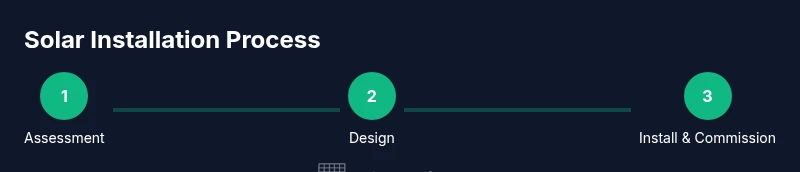
A typical UK solar installation follows a sequence from site survey to commissioning. Expect a pre-installation assessment, plan review, roof access preparation, mounting rail installation, panel placement and wiring, inverter connection, grid-compliance testing, and final commissioning. Timeline depends on scheduling and planning permissions but usually spans several weeks from survey to completion. Safety considerations are paramount: use fall protection, ensure electrical isolation during work, and verify correct grounding and insulation. A licensed electrician should perform the final electrical tests and meter connections. Image references and installation diagrams can help you visualize the layout and wiring path.
Maintenance, monitoring, and long-term performance in UK conditions
Solar panels demand minimal maintenance, with most attention given to keeping surfaces clean of dust and bird droppings. Periodic inspections of mounting integrity, wiring, and inverter performance help catch issues early. Monitoring software or inverters with remote readouts let you track daily production and identify shading or soiling events. Temperature and weather can affect efficiency, especially in winter; ensure adequate ventilation and prevent snow or debris build-up. Warranties typically cover modules for 20-25 years and inverters for 10-15 years, providing long-term protection when properly maintained. The Solar Panel FAQ team recommends reviewing your performance annually and planning for performance degradation over time.
Tools & Materials
- Measuring tape (2m+)(To measure roof area and panel spacing)
- Safety gear (helmet, harness, non-slip shoes)(Roofwork safety essential)
- Voltage tester / multimeter(For basic electrical checks)
- Ladder or roof access equipment(Safe access to roof)
- Torque wrench(Tighten mounting hardware to spec)
- Mounting rails and clamps(Secure panel mounting)
- Solar panels (as designed)(Specified by design)
- Solar inverter(Central or microinverters)
- Electrical conduit and connectors(Safe wiring run)
- Electrical meter or clamp meter(For performance monitoring)
Steps
Estimated time: 4-8 weeks
- 1
Assess energy needs and roof suitability
Review one full year of electricity bills to establish typical usage and peak times. Inspect roof orientation, tilt, and potential shading. Create a site sketch to visualize panel layout and wind exposure. Image reference: include a photo of your roof taken from a ladder angle to show potential obstructions.
Tip: Document shading at different times of day and seasons; this helps sizing accuracy. - 2
Check planning, permits, and grid requirements
Confirm whether planning permission is needed for your property type and location. Check building regulations, DNO requirements, and the latest export rules. Obtain a plan or survey from a qualified installer for regulatory alignment.
Tip: Contact your local planning office early to avoid delays. - 3
Design the system and obtain quotes
Work with a certified installer to size the system, select modules and an appropriate inverter, and model expected output. Gather at least three formal quotes with itemized costs and warranties. Compare per-watt pricing and the projected annual production.
Tip: Ask for sample layouts and a written performance estimate. - 4
Prepare roof and mount hardware
Install mounting rails securely, ensuring alignment and correct weatherproofing. Verify all anchors and clamps are rated for your roof type. Prepare electrical routes and safety barriers before panel installation.
Tip: Do not proceed with live electrical work; ensure power is isolated during connections. - 5
Install panels, connect inverter, and perform tests
Mount panels, wire strings, connect to the inverter, and route cabling safely. Run insulation checks, then power up and test output. Schedule a final inspection to confirm compliance and performance.
Tip: Keep a detailed as-built diagram for future maintenance. - 6
Register for export payments and set up monitoring
Enroll in the SEG (or applicable export program) and configure monitoring software to track daily and seasonal output. Review guarantees and warranty documents, and establish a plan for maintenance.
Tip: Set alerts for performance dips to catch issues early.
Frequently Asked Questions
Do I need planning permission to install solar panels in the UK?
Most domestic solar installations do not require planning permission, but exceptions exist for listed buildings, conservation areas, or local restrictions. Always check with your local planning authority if you’re unsure.
Most homes don’t need planning permission, but check local rules if your property is historic or in a protected area.
What maintenance do solar panels require?
Solar panels require minimal maintenance: occasional cleaning and annual inspections of mounting and wiring. Check inverter performance and keep an eye on any shading changes that reduce output.
Panels mostly need simple cleaning and periodic checks of wiring and inverter performance.
How long do solar panels last?
Most solar panels carry warranties around 25 years and can continue producing electricity beyond that with gradually reduced efficiency. Expect long-term performance with routine maintenance.
Panels typically come with 25-year warranties and can last several decades with proper care.
Is it safe to install panels myself?
DIY rooftop installation is risky and not recommended due to fall hazards and electrical safety. For most homeowners, hiring a certified installer ensures safety, correct wiring, and grid compliance.
Installing on a roof yourself is dangerous; hire a qualified installer for safety and compliance.
What is the Smart Export Guarantee (SEG) in the UK?
The SEG is an export payment scheme that pays you for excess electricity exported to the grid through your supplier. Eligibility depends on your supplier and tariff terms, so confirm details with your provider.
SEG pays you for exported energy via your supplier; check with your provider for terms.
How should I choose a reputable installer?
Look for MCS certification, references, clear written quotes, and robust warranties. Verify manufacturer compatibility, after-sales support, and the installer’s compliance with electrical and building standards.
Choose installers with solid certifications, good reviews, and clear warranties.
Watch Video
Top Takeaways
- Plan around your energy use and roof potential.
- Obtain multiple quotes and verify installer credentials.
- Understand UK incentives and export payments.
- Prioritize safety and future-proofing in design.