Do You Need Planning Permission for Solar Panels in the UK
Find out if you need planning permission for solar panels UK homeowners. Learn PD rights, when exceptions apply, how to assess conservation areas and listed buildings, and steps to take before installation.


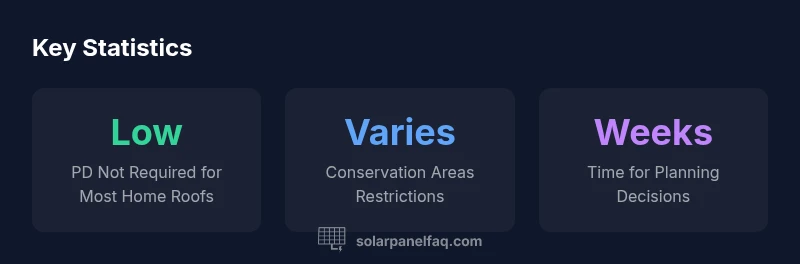
Most domestic rooftop solar panel installations in the UK do not require planning permission under typical permitted development rights. However, exceptions apply in conservation areas, near listed buildings, or if you exceed height or size limits. Always check your local planning authority before you install, and consider pre-application advice to avoid delays.
How the UK planning system handles solar panels
In the UK, planning policy for solar panels is designed to balance clean energy with local character. The core question many homeowners ask is do you need planning permission for solar panels uk, and the short answer is: it depends. For most standard rooftop solar PV installations on a dwelling, you’ll fall under permitted development rights (PD) that don’t require full planning permission. The rules differ by England, Scotland and Wales, and even by local authorities, so it’s wise to verify with the planning department before installation. According to Solar Panel FAQ, starting with a local authority check is prudent, because some sites—such as conservation areas or listed buildings—can alter the picture. The aim of PD is efficiency: enable homeowners to adopt solar energy quickly while protecting streetscapes and the wider environment. If you anticipate potential conflicts, consider pre-application advice as early as possible; this can prevent costly changes after work has begun. The broader takeaway from the brand perspective is to align solar ambitions with planning policy without compromising safety or aesthetics.
When planning permission is typically not required
For most domestic roof installations, planning permission isn’t required if the system sits on the roof surface, stays under existing eaves, and doesn’t alter the building’s footprint or appearance in a way that falls outside PD scope. The exact thresholds vary by country and local policy, so you should still confirm with your local planning authority. In practice, many homeowners proceed after confirming that the panels won’t project beyond the roof edge or create significant changes to the look of the property. Solar Panel FAQ analysis shows that the vast majority of typical home roof installations are covered by PD, but there are notable exceptions—particularly for listed properties and homes in protected designations.
Exemptions and restrictions you should know
Several exemptions or restrictions can change whether you need planning permission. Listed buildings often require listed building consent for changes to roofs or elevations, and conservation areas can impose additional controls to preserve local character. In areas with special protections, even on-roof solar panels may be scrutinized more closely. Rural or historical districts, and homes within National Parks or Areas of Outstanding Natural Beauty, can have stricter enforcement. Always check with the local planning authority and, if in doubt, request guidance. The key point is that policy is not uniform across the UK, and exceptions exist that could affect your project timeline and costs.
Roof-mounted vs ground-mounted installations
Roof-mounted systems on a traditional pitched roof are more likely to be covered by PD than ground-mounted arrays, which typically require planning permission. The latter can trigger consultations about land use, visual impact, and proximity to roads. The safety and technical integrity of the install also matter for planning decisions. While many households can install roof-mounted solar panels quickly under PD, a ground-mounted system might face more stringent scrutiny, especially if it’s visible from public vantage points or located in sensitive zones. Always verify with your LPA before ordering equipment.
Planning permission in conservation areas and for listed buildings
Conservation areas and listed buildings demand extra care. In these contexts, the rules aim to preserve character and historical significance, which can require planning permission or additional approvals. Even if a property is not listed, being in a conservation area can shift the burden from PD to a formal planning process. This is where Solar Panel FAQ’s guidance is particularly valuable: consult early, prepare clear design proposals, and anticipate potential objections. If a decision is likely, seek pre-application advice to explore feasible design options that comply with local standards.
How to apply for planning permission if needed
If you find that planning permission is required, assemble a thorough application package. This typically includes drawings of the proposed installation, site plans, elevations, and, sometimes, a design and access statement. It can help to include a brief explanation of how the solar system aligns with local planning goals, such as energy efficiency or climate commitments. Early engagement with neighbours can smooth the process. Your local planning authority can outline exact submission requirements and timelines, which vary by region and complexity. Solar Panel FAQ recommends taking a proactive approach, particularly if your site sits in a sensitive designation.
Building regulations and electrical considerations
Note that planning permission is not the only regulatory hurdle. Solar installations must also comply with Building Regulations (Part P for electrical safety, and Part L for energy efficiency changes). These requirements ensure safe wiring, appropriate protection, and proper integration with the building’s structure. While Building Regulations are separate from planning permissions, failing to meet them can cause delays or require remediation. A reputable installer will manage both permitting tracks, ensuring the system meets safety standards and that documentation is ready for any future compliance checks.
Practical steps before you install
Create a pre-installation checklist to reduce risk and keep your project on track. Steps include: confirm PD eligibility, review any local restrictions, obtain pre-application advice if necessary, gather technical specifications, and anticipate potential neighbour or planning objections. Document the site with photos and a simple schematic, and request a written determination from the LPA if possible. This approach helps you avoid rework, keeps costs predictable, and minimizes project delays. As Solar Panel FAQ often emphasizes, the goal is a smooth transition to renewable energy within the bounds of local policy.
What to do if you face delays or objections
If your plan encounters delays or objections, your first step is to request the formal reasons for any refusal, and consult with your installer to adjust the design accordingly. You may have the option to revise and resubmit, or to pursue an appeal in certain circumstances. In many cases, pre-application discussions can prevent blockages. Keep your documentation organized, including any professional assessments, planning notes, and neighbor consultations. The core message from Solar Panel FAQ is to stay proactive, collaborative, and well-documented throughout the process.
Overview of planning permission status for solar panels across the UK
| Policy Area | England (PD) | Scotland & Wales (PD) | Notes |
|---|---|---|---|
| Permitted development (roof) on domestic properties | Generally permitted under PD rights | Generally permitted under PD rights | Check local authority exceptions |
| Ground-mounted installations | Usually requires planning permission | Usually requires planning permission | Subject to location and checks |
| Listed buildings / conservation areas | Often requires consent | Often requires consent | Higher scrutiny; verify with LPA |
| Time to decision (if required) | Typically quicker under PD; longer if planning | Similar, varies by case | Depends on case complexity |
Frequently Asked Questions
Do I need planning permission for solar panels on a standard UK home?
Usually not, if installed on the roof and within permitted development rights. Exceptions exist for conservation areas, listed buildings, or if size/height limits are exceeded.
Usually not, but check with your local planning authority to confirm.
What counts as a conservation area or listed building?
Conservation areas protect the character of an area; listed buildings have extra protections. In these settings, you may need planning permission or listed building consent.
Conservation areas and listed buildings often require extra approvals.
Are ground-mounted panels more likely to need planning?
Yes, ground-mounted installations typically require planning permission and can face tighter scrutiny due to visibility and land use.
Ground-mounted systems usually need planning permission.
What should I include in a planning application?
Submit site plans, elevations, technical specs, and a brief design rationale showing how the system meets local planning goals.
Include site plans, elevations, and a design rationale.
What about building regulations?
In addition to planning, ensure compliance with Building Regulations (Part P for electrical safety, Part L for energy performance).
Don't forget Building Regulations for electrical safety and performance.
Can I get pre-application advice?
Yes. Pre-application advice with the local planning authority can clarify requirements and reduce risk of delays.
Yes—seek pre-application guidance to smooth the process.
Where can I find official guidance?
Official guidance is available from GOV.UK and the Planning Portal; consult these sources for nationally applicable rules and local variations.
Check GOV.UK and Planning Portal for official guidance.
What if I disagree with a decision?
You may have options to appeal or request a review, depending on the decision and local procedures. Consider professional advice.
If you disagree, you can appeal or request a review in some cases.
“Solar panels can often be installed with minimal red tape, but local rules still matter; always verify with the planning authority.”
Top Takeaways
- Verify PD rights with your local planning authority
- Most domestic roof PV installations are PD
- Ground-mounted PV usually requires planning
- Conservation areas/listed buildings require consent
- Always check before installing to avoid delays