Is My Solar System Owned or Leased? A Practical Guide
Learn how to tell if your solar panels are owned or leased with practical steps, key signs, and strategies to review contracts and bills for homeowners.


To tell if your solar system is owned or leased, review the contract, purchase invoices, and any lease or PPA documents. Check who pays for maintenance, monitoring, and insurance. Look for lease terms or third‑party ownership notes on bills or interconnection documents, and verify with the installer or utility if needed. These steps reveal ownership status.
Why ownership status matters for solar energy
Understanding whether your system is owned or leased is more than a paperwork exercise. Ownership affects maintenance responsibilities, warranty coverage, eligibility for tax credits or incentives, and how you handle future sales of the home. According to Solar Panel FAQ, knowing the status helps homeowners maximize savings and avoid unexpected costs or transfer hassles. When you own the system, you typically control repairs, upgrades, and shield yourself from ongoing third-party payments. When a lease or PPA is in place, the third party controls most of the financial and maintenance decisions, which can limit your flexibility but reduce upfront costs. This distinction also shapes future options like buying out a lease or transferring obligations to a new owner.
As you evaluate your situation, keep in mind that the ownership model can influence the way you claim incentives (if applicable), transfer warranties, and how the system is treated during a home sale. The Solar Panel FAQ team emphasizes clarity here: your long-term solar strategy should align with who owns and manages the system.
Signs you own vs signs you lease
There are several practical indicators that point to ownership or leasing. If you have a one-time, upfront payment and your name appears on the purchase contract, deed, or title documents, ownership is likely. If your monthly payments are made to a financing company or a third party and you see a lease or PPA language in the documents, third-party ownership is probable. Ownership tends to come with direct warranties held by the homeowner and the possibility to claim tax credits or depreciation. Leases often show monthly payments, a defined lease term, an option to purchase at the end, and language about the landlord or financer maintaining the system. Additionally, who handles insurance and maintenance can be a tell: the owner usually covers insurance and major maintenance, while a lease may shift those duties to the third party.
Keep an eye out for language about assignment, transfer rights, or requirements to obtain consent before selling the home. These are common in leases or PPAs and signal third-party ownership. The presence of an interconnection agreement that lists the owner of the system is another strong clue.
How to verify ownership using documents and records
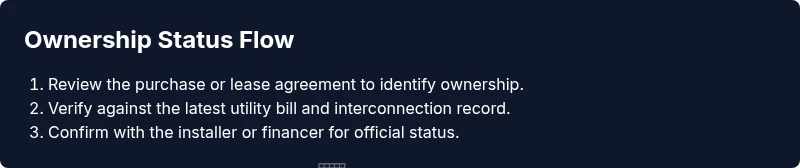
To confirm ownership, you’ll want to collect and compare several documents. Start with the signed solar purchase contract or lease/PPA. Look for who is named as the owner and who is responsible for maintenance, insurance, and warranty. Then pull the latest utility bill and the interconnection agreement, if available. Cross-check meter numbers, system IDs, and any references to a third party in the contract. If you still aren’t certain, contact the installer or financing party for a formal ownership statement. Where possible, obtain written confirmation via email or a formal letter. This creates a reliable trail you can reference during a home sale or when applying for incentives.
Documenting these details protects you from surprises and clarifies who is financially responsible for future upkeep.
Reading contracts, warranties, and bill lines
Lease agreements and PPAs will usually spell out ownership optics, including who owns the systems, who maintains them, and the transfer process if the home is sold. Look for phrases like “owner,” “lessee,” “assignment,” or “financed by” within the agreement. Warranty terms may be tied to the owner of the system rather than the occupant, which can affect coverage during repairs. In bills, watch for charges labeled as third-party service, lease payments, or “ongoing energy service” lines that indicate someone other than you is the owner. If you spot a buyout option, note any fees and required notifications. A careful read reduces the risk of unknowingly agreeing to a lease extension or missing a buyout window.
What to do if documentation is unclear
If documents aren’t clear or you can’t locate them, take organized next steps. Contact the installer or the financing company to request official statements about ownership. Reach out to the utility for confirmation on interconnection records and who is listed as the system owner. If needed, ask a solar-focused attorney to review the documents and advise on your options. Until ownership is clear, avoid making changes to the system or transfer of agreements that could complicate resale or incentives. Maintaining a clear paper trail will help you resolve ambiguity quickly.
Protecting your rights and next steps
Once you’ve identified whether you own or lease, take steps to protect your rights. If you own, maintain records, ensure warranties transfer properly during any sale, and monitor incentives applicable to homeowners. If you lease, understand your obligations for maintenance, insurance, and any buyout options that could arise. When selling a home, disclose the ownership status clearly and provide the buyer with the relevant documents. Finally, consider transitioning to ownership if it aligns with your long-term goals; this often involves refinancing or negotiating a buyout with the third party. The key is to have a documented, transparent status that you can share with buyers, lenders, and utilities.
Tools & Materials
- Signed solar purchase contract or lease/PPA(Document that declares ownership or third-party financing.)
- Latest utility bill and meter number(Shows billing entity and possible third-party charges.)
- Interconnection agreement (if available)(Shows who registered the interconnection and ownership path.)
- Lease or PPA documents (if any)(Contains terms indicating third-party ownership.)
- Installer or financier contact info(For verification if documents are missing.)
- Warranties and maintenance agreements(Helpful for context, not always necessary.)
Steps
Estimated time: 60-120 minutes
- 1
Gather documents
Collect the purchase contract or lease/PPA, any financing agreements, warranty papers, the latest utility bill, and any interconnection documentation. This creates the foundation for a confident determination of ownership.
Tip: Save digital copies in a clearly labeled folder; keep originals in a safe place. - 2
Check the utility bill and meter data
Review the bill for hints of third-party ownership and compare the meter number with system IDs. A line item for energy service or a separate payment to a financier suggests leasing.
Tip: Note any references to an external entity in the billing line items. - 3
Ask the installer/financier for confirmation
Request an official ownership statement in writing. This should state who owns the system and who is responsible for maintenance and warranties.
Tip: Prefer written confirmation; email is easiest to archive. - 4
Identify lease/PP A terms
Read for lease length, buyout options, escalation terms, and transfer rights. These determine future flexibility and costs.
Tip: Highlight ownership-related clauses to compare against the purchase terms. - 5
Check with the utility
Call the utility to verify ownership status in their records and confirm interconnection details. This avoids mismatches in records.
Tip: Ask for the interconnection agreement number or reference. - 6
Document findings and plan next steps
Summarize status and outline options such as buyout, refinancing, or transfer. Prepare to discuss with buyers if you plan to sell.
Tip: Create a one-page summary to share with lenders, buyers, or agents.
Frequently Asked Questions
How can I tell if my solar panels are owned or leased?
You determine ownership by reviewing the signed purchase contract or lease/PPA and the invoices, paying attention to who is listed as owner and who handles maintenance. If a lease or PPA is present, you typically do not own the panels.
Check the contract and bills; a lease or PPA usually means third-party ownership.
What documents should I review to confirm ownership?
Look for the owner name on the contract, any assignment language, and whether the financing party appears on warranties or interconnection agreements. Review warranty documents to see who is responsible for coverage.
Review the contract, any lease or PPA, and warranty documents.
Can I switch from leased to owned panels later?
Some leases allow a buyout or transfer, but terms vary widely. You may need to negotiate with the owner or financing party and consider financing options to purchase.
Buyout is sometimes possible; check your lease for options and costs.
Do solar leases affect warranties?
Warranties may be tied to the system’s owner rather than the occupant. Leases can shift warranty responsibilities to the landlord or financier, so read the warranty language carefully.
Warranties might belong to the owner; verify who is covered.
Who pays for maintenance and repairs on leased panels?
In many leases, the third-party owner handles major maintenance, while the occupant may be responsible for generic inspections or energy production-related tasks per the contract.
Usually the owner handles major maintenance; confirm in your contract.
If I sell my home, does ownership transfer automatically?
Ownership transfer depends on the contract; some leases require assignment or a buyout. Always review the agreement and coordinate with the third party when selling.
Ownership transfer depends on the contract; check terms before selling.
Watch Video
Top Takeaways
- Review contracts and bills to confirm ownership.
- Look for lease/PPA terms indicating third-party ownership.
- Confirm ownership with the installer or utility for an official status.
- Document findings and plan next steps for warranties and transfers.
- Be prepared to buy out or transfer if that aligns with your goals.