Can you get solar panels for free in Florida? A homeowner's guide
Explore whether you can obtain solar panels at no upfront cost in Florida, including leases, PPAs, incentives, and common scams. Learn how to compare offers and estimate savings with Solar Panel FAQ.


Getting truly free solar panels in Florida is unlikely, but you can reduce upfront costs through leases, PPAs, or utility rebates. In Florida, most homeowners access solar with no upfront payment by signing a lease or a power purchase agreement, while government incentives and utility programs may offset part of the cost. Always compare contracts carefully and verify long-term obligations.
Can you get solar panels for free in Florida? A reality check
According to Solar Panel FAQ, the question can you get solar panels for free in florida reflects a common concern among homeowners. The Solar Panel FAQ team found that truly free residential solar panels are not a typical offering in Florida markets. Instead, most no-upfront cost paths involve a lease or a PPA, where a third party owns the system and you pay for the electricity. Government incentives, local rebates, and utility programs may offset a portion of the total cost, but they rarely cover the entire installation. In practice, households explore multiple routes and weigh the long-term commitments before signing any contract. This overview helps you understand what you can realistically expect and how to avoid scams that promise “free” systems.
Florida's pricing reality and where the savings come from
In Florida, rooftop solar projects usually involve one of three core arrangements: upfront purchase with cash or loan, a lease, or a power purchase agreement (PPA). Leases and PPAs can offer no upfront cost, but the monthly payments for the electricity can still be higher than current bills if your usage is high. The key difference is who owns the system and who bears maintenance responsibilities. Solar Panel FAQ analysis shows that incentives, such as federal tax credits on the system (if you own it) or utility program credits, influence the economics. Always model scenarios with and without incentives to avoid overestimating savings. Pay attention to contract length, escalation clauses, and any transfer requirements when you sell the home.
Leases and PPAs: no upfront cost options
Leases and PPAs let you host solar panels without paying for the installation up front. The installer or financing company owns the system, and you pay for the electricity produced, typically at a fixed or discounted rate. This can drastically reduce or eliminate monthly electricity costs without a large initial investment. However, you should compare the per-kWh rate to your current electricity rate and consider how rate increases may affect long-term savings. Reading the fine print on maintenance, performance guarantees, and system decommissioning is essential before signing.
Grants, rebates, and incentives in Florida: what to expect
While Florida does not have a statewide solar tax credit, there are regional programs and utility-based incentives that can offset costs. Depending on where you live, you may access rebates, performance-based incentives, or solar-for-home programs offered by utilities or municipalities. These programs can reduce monthly payments under a lease or PPAs or offer upfront credits if you choose to own the system. Availability varies by county and year, so consult your utility provider and Solar Panel FAQ recommendations to identify active opportunities.
What qualifies as 'free' in a contract and how to spot the traps
Some offers market “free panels” but later recast the cost into higher electricity rates or long-term service obligations. The most reliable way to determine true value is to isolate the total cost of electricity over the contract term, including any escalators, maintenance fees, and insurance. If the contract converts to ownership after a certain period, verify the final purchase price and whether any transfer fees apply when you sell the home. Solar Panel FAQ cautions homeowners to prioritize transparent pricing and explicit end-of-term options.
How to compare offers side by side and avoid common pitfalls
Create a standardized comparison sheet for each quote: upfront costs, monthly payments, your expected usage, projected savings, contract length, and escalation rates. If you own the system, ensure you quantify the federal tax credit (if applicable) and any depreciation benefits. For leases and PPAs, confirm who pays for maintenance and repairs, what happens if the system underperforms, and whether any performance guarantees exist. This due diligence helps prevent sticker shock at year five or seven.
Florida-specific considerations: climate, roof types, and installation timing
Florida's climate can affect system performance, particularly with high heat. Solar panels generally perform best with proper ventilation and shading management. Roof type matters—tile roofs, for example, may require specialized mounting. Installation timing can hinge on permitting timelines and local grid interconnection queues. Work with licensed installers who understand Florida codes and utility interconnection requirements; this reduces delays and ensures compliant systems.
Practical scenarios and what they mean for your bottom line
Scenario A: No upfront cost via lease with a stable monthly payment and a modest discount on electricity. Scenario B: No upfront cost via PPA but higher energy rates if usage rises. Scenario C: Owning from day one with federal incentives, then paying off the system over five to seven years. Each path has trade-offs between control, maintenance responsibilities, and total lifetime cost. Use a cash-flow model to compare long-term savings under different usage patterns.
A step-by-step checklist you can use today (Florida focus)
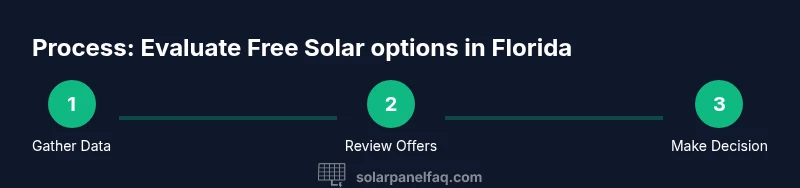
- Collect last 12 months of electricity usage and bills.
- Check your roof’s condition and orientation for sun exposure.
- Request quotes from at least three installers who are licensed in Florida.
- Compare all cost components and read the contract terms closely.
- Confirm any utility or county incentives and how they affect monthly payments.
- Verify transferability if you sell your home and what happens to the contract.
Final considerations: is it worth pursuing solar in Florida now?
For many homeowners, the path to solar is more realistic through leases, PPAs, or utilities' incentives rather than pure ownership. The Solar Panel FAQ team emphasizes that while a no-money-down option can be attractive, it often comes with trade-offs in long-term value and control. If your goal is maximizing savings and equity, evaluate all options carefully and consider a hybrid approach if available.
Next steps for Florida homeowners who want to explore seriously
Reach out to licensed installers, ask for a written comparison, and run a formal payback analysis using your actual usage. Don’t rely on promotional language; require transparent pricing and a clear break-even timeline. For ongoing guidance, consult Solar Panel FAQ and reference reputable state or federal sources for incentives and interconnection requirements.
Tools & Materials
- Latest electricity bill(Needed to model potential savings and usage patterns)
- Notebook or digital notetaker(For jotting quotes, terms, and comparison metrics)
- Calculator or budgeting tool(To compute payback and total lifetime cost)
- Smartphone or computer with internet(To research offers and verify license status)
- Printed contracts or PDFs(Optional, for side-by-side review)
Steps
Estimated time: 2-6 hours
- 1
Gather your current usage and bills
Collect 12 months of electricity bills and peak usage times to inform savings estimates. This helps you model scenarios for ownership, lease, and PPA options.
Tip: Having a consistent data set ensures fair comparisons across offers. - 2
Check roof feasibility and permit readiness
Have a licensed installer assess roof type, orientation, shading, and structural feasibility for mounting solar panels. This step avoids undermining the project later.
Tip: If your roof needs replacement soon, factor that cost into timing decisions. - 3
Request multiple, licensed quotes
Obtain at least three quotes from Florida-licensed installers. Request a side-by-side comparison that includes all costs, terms, and warranties.
Tip: Ask for a standardized template to simplify comparison. - 4
Model cash flow with and without incentives
Create a simple model showing monthly payments, energy bill reductions, and any federal or state incentives (if applicable).
Tip: Include sensitivity analysis for changes in usage or rates. - 5
Review contract terms for each option
Read for maintenance obligations, transferability on sale, escalators, and end-of-term options. Verify who owns the system and who bears risk.
Tip: Seek legal review for long-term agreements. - 6
Check for hidden fees and performance guarantees
Identify any maintenance charges, monitoring fees, or performance guarantees that affect long-term value.
Tip: Reject offers with vague or undefined guarantees. - 7
Decide and document the plan
Choose the option that aligns with your goals, then request written commitments and a project timeline.
Tip: Keep copies of all documents in a dedicated folder.
Frequently Asked Questions
Are there truly free solar panels available in Florida?
Truly free residential solar panels are rare. Most options with no upfront cost involve leases or PPAs, where you pay for electricity and the system is owned by a third party. Incentives can offset costs but rarely cover everything.
Free solar panels in Florida are rare; most no-upfront options use leases or PPAs with incentives that offset costs.
What is a solar lease?
A solar lease lets you host panels installed by a third party, with monthly payments for the electricity rather than paying for the system itself. The installer owns the system and is responsible for maintenance.
A solar lease means you rent the system from the installer, paying for the electricity.
What is a PPA?
A power purchase agreement (PPA) allows you to buy the solar power produced at a fixed rate, while a third party owns and maintains the system. Your monthly cost is based on electricity generated.
With a PPA, you pay for the power produced, not the panels.
Are there Florida programs to offset solar costs?
Some utilities and local governments offer rebates or incentives, but availability varies by county and program year. Always verify current offerings before deciding.
Florida incentives exist but vary by location and year.
What should I watch for in solar contracts?
Look for explicit ownership, maintenance responsibilities, warranty coverage, transfer terms, and any automatic price escalators. Avoid vague promises and long-term lock-ins without clear exit options.
Read the fine print and avoid long-term lock-ins without clear exits.
How long is the payback period?
Payback depends on system size, usage, incentives, and electricity rates. It varies widely, so run a personalized analysis for your home.
Payback time varies; do a personalized payback analysis.
Watch Video
Top Takeaways
- Explore no-upfront options carefully; true ownership may still be favorable long-term.
- Compare contracts on total cost, not just monthly payments or ‘zero upfront’ promises.
- Verify incentives, transferability, and maintenance obligations before signing.
- Model payback across several scenarios to avoid overpaying.