How to Stop Solar Panel Farms: A Community Guide
Learn how to influence or oppose solar farm development through lawful channels. This practical guide covers hearings, environmental reviews, mitigations, and constructive alternatives for communities seeking balanced energy progress.


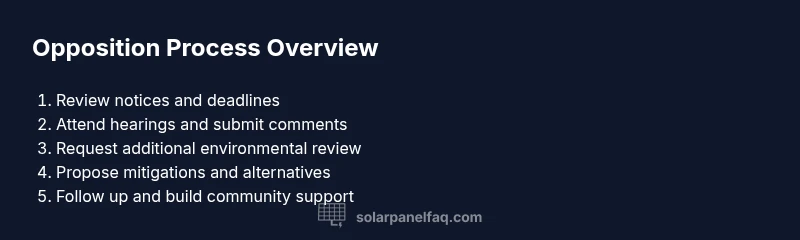
1) Review project notices and deadlines. 2) Attend public hearings or watch recordings and submit concise comments. 3) File formal written objections with planning authorities. 4) Propose mitigations or siting alternatives to address local concerns. This approach stays legal and builds constructive dialogue.
Why Communities Oppose Solar Farms
According to Solar Panel FAQ, concerns commonly cited include land use, wildlife habitats, glare, aesthetics, property values, and local grid reliability. Opponents often worry about long-term land conversion, potential disruption to local ecosystems, and the visual impact on cherished landscapes. Understanding these concerns helps ensure that opposition remains constructive and rooted in verifiable information rather than rumor. In many jurisdictions, project decisions hinge on transparent processes, credible data, and the ability to propose practical mitigations that align with community values.
What counts as legitimate opposition? It’s not about halting energy progress; it’s about ensuring projects reflect local priorities, protect sensitive resources, and integrate with existing infrastructure. When communities articulate specific impacts—such as loss of prime farmland, risk to pollinators, or glare affecting nighttime visibility—planners can consider mitigations or alternative sitings. Proponents may respond with technical studies, but the strongest objections are backed by documented concerns and proposed solutions. This section will outline how to turn concerns into constructive engagement rather than general statements. The goal is to help readers pursue lawful channels, build credible evidence, and collaborate toward outcomes that preserve energy access while respecting local context.
Tools & Materials
- Project notices and filings(Collect notices from the local planning department and project proponent; note deadlines.)
- Notepad or digital device(Take notes, track questions, and store documents.)
- Site map or parcel boundary(Identify land parcels, setbacks, easements, and access routes.)
- Public hearing calendar(Document date, time, location, and attendance method.)
- Public codes and environmental rules(Copies of zoning, environmental, and glare guidelines.)
- Camera or smartphone(Photographs for documentation when allowed.)
- Legal reference materials(Local codes, code books, and reach-out templates.)
Steps
Estimated time: 4-6 weeks
- 1
Review notice and deadlines
Locate the project notice of application and any accompanying documents. Identify the comment window, required formats, and submission methods. Compile a preliminary list of concerns tied to specific codes or plan policies.
Tip: Create a calendar reminder for each deadline and save all documents in one folder. - 2
Attend or view the public hearing
Attend in person or watch a recorded session to understand how the process works and what questions are raised by others. Take notes on key concerns and proposed mitigations.
Tip: Bring a one-page summary of your top concerns to reference during testimony. - 3
Submit written comments
Prepare a clear, concise written statement that cites local codes, plan policies, and evidence. Attach credible exhibits such as maps or studies and reference the hearing date.
Tip: Use formal language and keep comments within the allowed word limit. - 4
Request additional environmental review or mitigations
If impacts appear inadequately addressed, file a request for supplemental review or specific mitigation measures. Document your rationale with data from official sources.
Tip: Frame requests as improvements that protect community interests and energy goals. - 5
Propose alternatives or siting mitigations
Suggest alternatives like siting on degraded land, community solar, or rooftop options. Propose landscaping, setbacks, or screening to address visual and ecological concerns.
Tip: Offer concrete, implementable options rather than vague complaints. - 6
Organize community support and document outcomes
Coordinate with neighbors, track responses, and share updates. Consolidate feedback into a single, well-supported position to present at hearings.
Tip: Build a coalition to amplify legitimate concerns and improve credibility.
Frequently Asked Questions
Is it legal to oppose a solar farm?
Yes. Communities can express concerns through public hearings, comment periods, and formal reviews. Ensure all actions comply with local laws and procedures.
Yes. You can oppose through hearings and formal reviews, following the rules.
What concerns do communities raise about solar farms?
Common concerns include land use, wildlife impact, glare, aesthetics, property values, and potential strain on local infrastructure.
Common concerns are land use, wildlife, glare, and aesthetics.
What is the most effective way to influence a project?
Attend hearings, submit well-documented comments, and request specific mitigations or alternatives. Build a coalition to strengthen your case.
Attend hearings, submit solid comments, and push for mitigations.
Can I propose alternatives like rooftop solar or storage?
Yes. Proposing rooftop solar, distributed generation, or storage can offer cleaner energy without large centralized farms.
Yes—propose rooftop solar or storage as alternatives.
What should I do if I suspect improper permitting?
Consult the planning department or a local attorney. File an official inquiry or appeal as appropriate, following due process.
Consult officials or an attorney and file appropriate procedures.
Watch Video
Top Takeaways
- Know deadlines and decision points for hearings.
- Engage respectfully with officials and developers.
- Propose specific mitigations or alternatives.
- Use official channels to record concerns and influence decisions.
- Consider viable energy alternatives when appropriate.