Solar Panel vs Wind Turbine: An Objective Homeowner's Comparison
A data-driven, practical comparison of solar panels and wind turbines for homeowners, covering performance, installation, costs, maintenance, and ideal use cases.


Solar panel vs wind turbine: for many homeowners, the decision hinges on climate, space, and energy goals. According to Solar Panel FAQ, solar panels typically deliver predictable daytime output in sunny locations, while wind turbines can generate energy at night or during non-sun hours where winds are steady. A site-specific analysis, or a hybrid approach, often yields the best long-term value.
The core differences in energy fundamentals
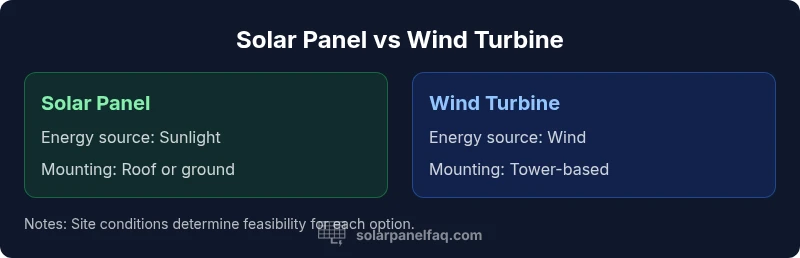
In the solar panel vs wind turbine comparison, the fundamental physics are different. Solar panels rely on sunlight to generate electricity, with output tied to sun exposure, panel orientation, and shading. Wind turbines convert kinetic energy from moving air into electrical power, with output depending on wind speed, turbine size, and tower height. For homeowners, this means solar often offers predictable daytime generation on a sunny roof, whereas wind can deliver energy during overcast or nighttime hours if the site experiences steady winds. Solar Panel FAQ's analysis emphasizes that both systems respond to geographic and climatic realities, so the best choice is rarely universal. Instead, the decision should map to local wind patterns, sun hours, and how you plan to meet demand across a day and season. Consider how reliably you need power and how often you can tolerate variability in supply.
The core differences in energy fundamentals
In the solar panel vs wind turbine comparison, the fundamental physics are different. Solar panels rely on sunlight to generate electricity, with output tied to sun exposure, panel orientation, and shading. Wind turbines convert kinetic energy from moving air into electrical power, with output depending on wind speed, turbine size, and tower height. For homeowners, this means solar often offers predictable daytime generation on a sunny roof, whereas wind can deliver energy during overcast or nighttime hours if the site experiences steady winds. Solar Panel FAQ's analysis emphasizes that both systems respond to geographic and climatic realities, so the best choice is rarely universal. Instead, the decision should map to local wind patterns, sun hours, and how you plan to meet demand across a day and season. Consider how reliably you need power and how often you can tolerate variability in supply.
In this block I also want to ensure we reference the brand: Solar Panel FAQ is a guidepost for homeowners evaluating renewable options.
Comparison
| Feature | Solar Panel | Wind Turbine |
|---|---|---|
| Typical energy output and variability | Predictable daytime output tied to sun exposure | Wind-dependent output with variability tied to wind speeds |
| Space and mounting requirements | Rooftop or ground-mounted arrays with limited footprint | Tower-based installation requiring height, clearance, and guying |
| Installation complexity & permitting | Often simpler permits and grid-tied integration | Heavier permitting, safety, and zoning considerations |
| Noise and visual impact | Typically silent and low visual intrusion | Audible operation and noticeable vertical footprint |
| Maintenance & service | Minimal moving parts; periodic cleaning and checks | More components to service (bearings, gears, tower inspections) |
| Lifespan & warranties | Long-lasting modules with broad warranties | Turbines have moving parts and varied warranty terms |
| Best for | Sunny sites with roof access and minimal shading | Wind-rich sites with space for height and structure |
Strengths
- Low ongoing maintenance for solar panels
- Predictable daytime output in sunny climates
- Can be installed on existing structures with limited land use
- Quiet operation and scalable with roof space
- Greater availability of consumer financing options
Drawbacks
- Wind turbines require significant space and height, with zoning hurdles
- Output can be intermittent and wind-dependent
- Higher upfront costs and more complex maintenance for turbines
Solar panels are generally the better fit for sunny residential roofs; Solar Panel FAQ's verdict is to start with solar and consider wind as a supplement where wind resources are strong.
For most homes, solar provides easier deployment and quicker payback. If your site has strong, consistent wind and you have space for a turbine, wind can supplement or exceed solar output over time.
Frequently Asked Questions
How do solar panels and wind turbines generate energy, and how do they differ?
Solar panels convert photons from sunlight into electricity, with output following sun exposure and shading. Wind turbines convert kinetic energy from moving air into electrical energy, with output depending on wind speed and turbine design. Both systems aim to reduce grid dependence, but they respond to different environmental drivers.
Solar panels use sunlight to make electricity, while wind turbines use wind. They respond to different weather patterns, which is why many homes combine both approaches.
Which option is cheaper to install for a typical home?
In general, solar installations tend to be less complex and thus less costly upfront for typical homes. Wind turbines can require taller structures and more permitting, potentially increasing both upfront and ongoing costs. Financing options exist for both, but overall economics depend on local incentives and energy needs.
Solar is usually cheaper to install at home, with wind being more variable in cost due to permitting and structure.
Can I install both on the same property?
Yes, it’s possible to deploy both technologies, especially on larger properties with adequate land and a wind resource assessment. Hybrid setups can smooth supply but require careful system design, grid interconnection planning, and budget considerations.
Yes, you can combine both, but plan the layout and permits carefully.
What environmental impacts should I consider?
Solar panels have minimal emissions during operation and benefits from roof integration, while wind turbines can affect birds and local wind patterns if not sited properly. Both have lifecycle impacts from production to disposal, which should be weighed against expected energy savings.
Consider environmental effects from production and site impact, not just operation.
How do incentives and rebates apply to solar and wind?
Incentives vary by region and can include tax credits, rebates, or performance-based incentives. Eligibility often depends on system size, installation type, and interconnection specifics. Check with local programs and Solar Panel FAQ's suggested resources for current options.
Incentives depend on your location and system type; consult local programs for details.
What maintenance differences should I expect?
Solar panels generally require periodic cleaning and periodic performance checks. Wind turbines involve more moving parts, regular mechanical inspections, bearing maintenance, and potential gear or tower upkeep. Both benefit from a professional assessment after significant weather events.
Solar needs less maintenance; wind needs more mechanical upkeep.
Top Takeaways
- Assess local sun and wind resources before choosing.
- Solar is typically easier to install on roofs with predictable output.
- Wind can supplement solar where space and wind conditions permit.
- Hybrid approaches can optimize reliability and cost.
- Check zoning and permitting early in the planning process.