Is Solar Energy Better Than Hydroelectric? A Practical Comparison for Homeowners
A rigorous, practical comparison of solar energy vs hydroelectric power for homeowners, examining reliability, costs, environmental impact, and deployment practicality.


Is solar energy better than hydroelectric? The short answer is: it depends on your site, goals, and budget. For homeowners, solar typically offers faster payback, modular installation, and lower fuel risk, especially in sunny regions, while hydro provides steady output in river-rich areas with strong infrastructure. In many cases, a hybrid approach or selective use of storage yields the best overall reliability and value.
Is solar energy better than hydroelectric? Framing the question for homeowners
Is solar energy better than hydroelectric? For many households, the answer hinges on local climate, roof or land availability, and the willingness to manage intermittency. The Solar Panel FAQ team notes that the decision is rarely binary; it depends on how you weigh reliability, cost, and environmental impact. According to Solar Panel FAQ, begin with a resource inventory: how much sun does your site receive, what water resources are nearby, and what incentives apply locally. This guide translates broad concepts into concrete decision points, emphasizing how storage, maintenance, and life-cycle value shape a home’s energy mix. Throughout the process, the question is revisited: is solar energy better than hydroelectric when viewed across different seasons, loads, and policy changes?
Resource and site considerations
Both solar energy systems and hydroelectric setups are heavily influenced by site characteristics. Solar energy benefits from roofs, open land, or parking canopies that receive abundant sunlight across the day. Hydroelectric projects require a reliable water source with sufficient flow and head pressure, which is often location-specific. When asking is solar energy better than hydroelectric, homeowners should assess roof orientation, shading, land availability, stream access, and seasonal water variability. In regions with long dry spells, solar tends to win on practicality; in river-rich regions with consistent flow, small-scale hydro can deliver a steadier baseline. The key is to inventory resources before choosing.
Reliability and variability: how predictable is the output?
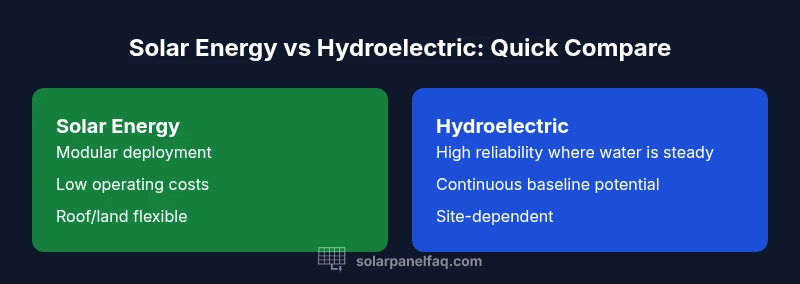
Intermittency is the defining feature of solar energy, driven by cloud cover and the diurnal cycle. Hydroelectric systems typically offer high reliability where river flow is stable, but even micro-hydro can experience seasonal fluctuations. When considering is solar energy better than hydroelectric, compare how each option behaves under peak demand periods. Solar shines during sunny afternoons and can be paired with storage to smooth output; hydro tends to provide more continuous baseline power, especially where seasonal runoff supports steady generation. The best choice often hinges on your tolerance for variability and your ability to deploy storage or backup systems.
Costs, financing, and incentives: the economic lens
The economics of solar energy versus hydroelectric power hinge on upfront costs, permitting, and ongoing maintenance. Solar installations have benefited from falling hardware costs, streamlined permitting in many areas, and generous incentives that improve payback timelines. Hydroelectric projects require more site-specific engineering, civil works, and environmental reviews, often leading to higher upfront costs and longer lead times. When asked is solar energy better than hydroelectric from a cost perspective, homeowners should model total lifetime costs, taking into account tax credits, net metering or feed-in tariffs, maintenance, and potential revenue from excess generation. While solar can deliver faster perceived payback, hydro may excel where long-term reliability justifies the investment.
Efficiency and performance characteristics: understanding metrics
Efficiency metrics for energy systems can be misleading if not paired with real-world factors. Solar modules convert sunlight with high practical efficiency, but performance depends on orientation, temperature, and shading. Hydroelectric efficiency depends on turbine design, head, and flow rates, which are more stable but highly site-dependent. When evaluating is solar energy better than hydroelectric, it helps to consider capacity factor, land-use efficiency, and the energy yield per square meter or per cubic meter of water. A balanced approach often combines solar with storage or hybrid water generation to maximize efficiency across seasons and loads.
Environmental impacts: emissions, habitat, and land use
Environmental considerations are central to the solar energy vs hydroelectric decision. Solar energy has near-zero emissions during operation but requires land or roof space and materials with lifecycle impacts. Hydroelectric power can offer low operating emissions but may affect aquatic ecosystems, fish passage, sediment transport, and river morphology. For homeowners weighing is solar energy better than hydroelectric, environmental impact assessments should weigh habitat disruption against land-use requirements, biodiversity considerations, and long-term ecological trade-offs. Modern designs increasingly address these concerns with wildlife-friendly spillways and dual-use land management.
Maintenance, lifespan, and operating costs
Routine maintenance for solar energy generally involves cleaning panels, inverter checks, and occasional component replacements, with relatively low ongoing costs. Hydroelectric systems require ongoing mechanical maintenance, turbine inspections, and water management to prevent sediment buildup and corrosion. Lifespan expectations vary by technology and quality of components, but both options benefit from proactive maintenance schedules and robust monitoring. When considering is solar energy better than hydroelectric for maintenance, homeowners should compare labor needs, parts availability, and downtime risk for each system type, as well as the practicality of remote monitoring and service networks.
Grid integration and energy storage: resilience and flexibility
Grid integration challenges differ for solar energy and hydroelectric power. Solar benefits from modularity and rapid deployment, and storage solutions can smooth supply during peak hours. Hydro electric plants naturally align with grid demand when water resources are steady, but integration can be complex in dispersed micro-hydro installations. For homeowners evaluating is solar energy better than hydroelectric, the ability to pair with batteries or a hybrid storage approach often tilts the balance toward solar, particularly in grids with high photovoltaic penetration and variable prices. Storage technologies, demand response, and intelligent controls all factor into a holistic resilience strategy.
Scalability, deployment contexts, and regional fit
Scalability plays a major role in the is solar energy better than hydroelectric discussion. Solar scales from small rooftop systems to large distributed arrays, offering flexibility for homeowners and communities. Micro-hydro tends to be highly site-specific but can serve off-grid or remote locations with reliable water flow. Regional climate, water rights, and regulatory frameworks significantly influence the feasibility and cost of each option. The overarching takeaway is that there is no one-size-fits-all answer to is solar energy better than hydroelectric; the best solution aligns with resource availability, policy incentives, and homeowner goals.
Policy, incentives, and the policy landscape in 2026
Policy and incentives shape the practical appeal of solar energy versus hydroelectric projects. Tax credits, rebates, and streamlined permitting can accelerate solar adoption, while hydropower projects often rely on broader infrastructure programs and environmental reviews. Homeowners should map available incentives, including property tax exemptions, production-based incentives, and utility programs. When evaluating is solar energy better than hydroelectric, policy environments matter as much as resource quality. Solar Panel FAQ analysis shows that strong incentives can dramatically shorten the payback horizon, especially in regions prioritizing distributed generation.
Decision framework: a practical home assessment
A robust decision framework starts with a resource audit, followed by a cost-benefit model and a risk assessment. Consider local resource metrics, seasonal variability, regulatory constraints, and the availability of storage or backup power. Use a simple decision tree: (1) Do you have reliable sun year-round or a strong river resource? (2) Is upfront capital accessibility feasible without debt? (3) Do you expect policy incentives to favor solar or hydro? (4) What is your tolerance for maintenance and supply risk? By answering these questions, homeowners can approach is solar energy better than hydroelectric with a clear plan and a realistic forecast.
Hybrid approaches and future trends: combining strengths
Hybrid systems that couple solar with hydro or other renewables can provide enhanced reliability and resource diversity. In some regions, small hydro can complement solar by delivering steady baseload while solar handles peak demand. These hybrid approaches also enable more robust storage strategies and demand-side management. When evaluating is solar energy better than hydroelectric, consider whether a blended solution could capture the best attributes of both resources, reduce exposure to weather variability, and maximize overall energy resilience for your home.
Comparison
| Feature | Solar energy | Hydroelectric |
|---|---|---|
| Reliability and variability | Moderate variability due to sun exposure; storage mitigates gaps | High baseline reliability where water flow is consistent; less weather dependence |
| Upfront cost and installation complexity | Typically lower upfront cost; modular deployment; simpler permitting | Higher site-specific costs; civil works; environmental reviews; longer lead times |
| Maintenance needs | Lower ongoing maintenance; periodic cleaning and inverter service | More complex maintenance; turbine and water management; potential wear from water/abrasion |
| Space, land, and site requirements | Roof or land area; scalable deployments; shading considerations | River access, head pressure, environmental permissions; site constraints |
| Payback potential and incentives | Strong incentives and net metering can shorten payback; scalable for homes | Longer payback in many cases; incentives vary by region and water rights |
| Environmental impact | Minimal emissions during operation; land-use considerations | Low emissions but potential ecological disruption; river habitat impacts |
Strengths
- Low fuel risk and predictable operating costs
- Modular deployment and easy scaling for homes
- Fast installation with accessible financing options
- Quiet operation and low maintenance for modern equipment
- Strong potential to pair with storage for reliability
Drawbacks
- Intermittent output without storage or backup
- Hydroelectric viability is highly site-specific
- Hydro projects can affect aquatic ecosystems and sediment flow
- Both options require regular maintenance and monitoring
Solar energy generally offers better fit for most residential homes, while hydroelectric can excel in river-rich regions with stable flow
For many households, solar energy provides quicker payback and scalability, especially with storage. Hydroelectric may outperform in sites with reliable water resources, but it demands more specialized assessment and permitting. The best choice is highly context-dependent.
Frequently Asked Questions
What factors determine whether solar energy is better than hydroelectric for a home?
The decision hinges on resource availability, regulatory context, upfront cost, maintenance expectations, and long-term incentives. If your site has strong sun and favorable incentives, solar energy often offers faster payback. If you have reliable river flow and infrastructure, hydro can provide steady output with potentially lower variability.
Key factors include resources, costs, and incentives. Solar often wins with sun and incentives; hydro shines where water flow is stable.
Can residential hydroelectric be cost-effective?
Residential hydro can be cost-effective in sites with reliable water flow and access to appropriate permits, but the capital and maintenance costs are typically higher and more complex than rooftop solar. Cost-effectiveness improves with long-duration operation and supportive policies.
Hydro can be cost-effective where water is stable and permits are favorable, but it generally requires more investment and maintenance than solar.
How do incentives affect the solar vs hydro decision?
Incentives such as tax credits, rebates, and net metering can dramatically shorten the payback period for solar. Hydro incentives vary by region and water rights, and may be less predictable. When policies favor distributed solar, the case for solar strengthens.
Incentives can tilt the balance toward solar, especially where net metering and tax credits are available.
What maintenance differences exist between solar and micro-hydro systems?
Solar systems require regular cleaning, inverter checks, and occasional module or battery replacements. Micro-hydro systems need ongoing turbine maintenance, water management, and sediment control. Maintenance planning should align with local know-how and service networks.
Solar maintenance is simpler; hydro needs more specialized upkeep and water management.
Is storage necessary to balance solar vs hydro?
Storage can significantly improve reliability for solar by buffering intermittency. Hydroelectric power can be more continuous, reducing reliance on storage in some cases depending on river stability. The optimal choice often includes some form of storage or backup energy.
Storage helps solar smooth out variability; hydro can be steadier but may still benefit from backup.
Are there hybrid solar-hydro systems for homes?
Yes. Hybrid systems can combine solar with small hydropower to diversify resource risk and improve reliability. Feasibility depends on local resources, permits, and integration with the grid or storage.
Hybrid solar-hydro configurations can balance variability and reliability if resources and permits allow.
Top Takeaways
- Assess your site resources before deciding
- Factor storage and backup for reliability
- Weigh up-front costs against long-term incentives
- Consider environmental impacts of each option
- Explore hybrid approaches when feasible