How many solar panels to power a house: A practical guide
Learn how to estimate the number of solar panels needed to power a home with an educational calculator, real-world examples, and practical tips for efficient sizing.


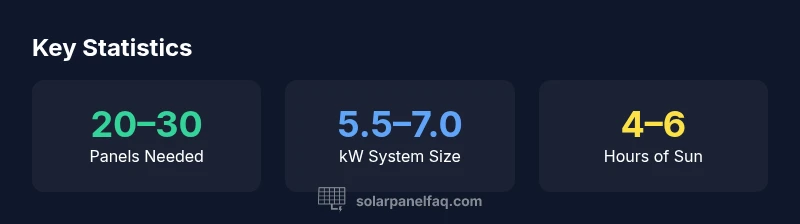
How many solar panels power a house depends on energy use, panel wattage, and available sun hours. There is no one-size-fits-all number. For many homes, sizing a 6 kW–9 kW system could mean roughly 20–30 panels (320–450 W each), but your exact requirement depends on energy habits, roof space, and sun exposure. Solar Panel FAQ notes steps to estimate.
How many solar panels to power a house: Overview
If you're asking how many solar panels to power a house, the short answer is: it depends on several variables. According to Solar Panel FAQ, there isn't a universal panel count that fits every home. The number hinges on your annual energy usage, the wattage of the panels you choose, local sun hours, and how much energy is lost to wiring, inverters, and soiling. To begin, you’ll estimate your annual consumption from past electric bills, then compare that to how much energy a single panel can produce in your location. A typical design process walks you through calculating a target system size, selecting panel specifications, and validating space constraints. Real-world results vary with weather, roof orientation, and household habits, so a personalized sizing calculation is essential.
- Steps to estimate:
- Determine annual
What Affects the Number of Panels
The number of solar panels needed is influenced by how much energy you use, the efficiency and wattage of the panels, and the sun you receive. A home with higher electricity consumption will require more panels, while a smaller home or a more efficient setup can do with fewer. Roof orientation and shading dramatically impact production; a south-facing roof with minimal shade generally produces more energy. Regional climate matters: sunny regions produce more per panel than cloudy areas. Additionally, future changes in energy usage—such as adding electric vehicles—can shift sizing needs. According to Solar Panel FAQ, grasping these variables helps homeowners plan realistically and avoid under- or oversizing.
Panel Wattage and System Size Basics
Panel wattage is the rated output under standard test conditions. Higher-wattage panels produce more energy per panel, which can reduce the total number of panels required for the same system size. A system’s total size is typically expressed in kilowatts (
Estimating Sun Hours by Region
Establishing how many sun hours you receive daily is essential for accurate sizing. Peak sun hours measure the average equivalent full-power sun exposure per day. Regions with long, sunny days can generate more energy per panel than cloudier locations. Shading, roof tilt, and orientation further influence effective sun hours. Local meteorological data or installer assessments can provide region-specific sun hours. Because sun hours vary seasonally, many homeowners use a conservative estimate to avoid under-sizing. Solar Panel FAQ notes that backing into an estimate with seasonal adjustments yields more reliable results.
Step-by-Step: Calculate How Many Panels You Need
To size a system, start with your annual energy use and divide by the expected annual production per panel after losses. Steps:
- Determine annual usage (monthly
Practical Examples: Low, Medium, High Usage
Low usage households often need fewer panels due to smaller electricity needs and efficient appliances. Medium usage profiles typically require a mid-range array, while high-usage homes—think EV owners or large households—may require a larger system. In every case, the exact count depends on local sun hours, roof space, and panel efficiency. The goal is to meet or slightly exceed annual consumption with reliable production, not to maximize the number of panels. Solar Panel FAQ advises validating estimates with a professional.
Roof Space, Orientation, and Shading
Roof space is a practical constraint. If your roof can’t accommodate enough panels, you may need higher-efficiency modules or a larger array to reach your target. Orientation and tilt influence energy capture; south-facing roofs with minimal shading maximize production in the northern hemisphere. Shade from trees, chimneys, or vents can dramatically reduce output, so placement planning matters. In some cases, microinverters or power optimizers help mitigate shading losses by optimizing each panel’s performance independently.
Sizing for Efficiency, Losses, and Battery Options
System losses from inverters, wiring, and soiling reduce the energy that actually reaches your home. The calculator you’ll use accounts for a reasonable loss range to avoid overestimating production. If you’re considering battery storage, remember that it changes the sizing dynamic: batteries add capital cost but can increase self-consumption and grid resilience. If grid-tied, you might size for net metering benefits rather than full off-grid capability. Solar Panel FAQ Team recommends weighing storage versus grid-tied options based on your reliability needs and budget.
How to Use Our Calculator for a Personal Estimate
Our calculator translates your monthly usage, panel wattage, sun hours, and system losses into a practical panel count. You’ll enter four inputs, see a computed number of panels, and understand the assumptions behind the result. Use the outputs to compare different panel wattages, adjust for losses, and visualize how changes in sun hours affect your needs. The goal is a clear, actionable estimate you can bring to a solar installer for professional validation.
Reference data for panel sizing estimates
| Factor | Typical Range | Notes |
|---|---|---|
| Annual energy use | 7,000–12,000 kWh | Household energy consumption |
| Panel wattage | 320–450 W | Common residential panels |
| Sun hours per day | 3–6 hours | Region-dependent |
| System losses | 5–15% | Inverter, wiring, and soiling |
Estimate how many solar panels you need to power your home based on your energy use, panel wattage, sun hours, and system losses.
Estimates the number of panels needed using annualized energy use, panel wattage, sun hours, and system losses.
Estimates assume typical conditions. Actual results vary with weather, shading, and equipment.
Frequently Asked Questions
What determines how many solar panels I need?
Your energy usage, the panel wattage, sun hours for your location, and system losses all determine the required panel count. A personalized sizing calculation accounts for these factors and yields a realistic estimate.
Your energy use, panel wattage, sun hours, and losses determine the number of panels you need.
Can I oversize my solar system to future-proof it?
Oversizing can raise upfront costs and may not always be cost-effective. It’s better to size for current needs and plan for anticipated changes with modular additions or enclosures. A professional can advise on flexibility.
You can plan for future needs, but oversizing isn’t always cost-effective; consult a pro.
Do I need a professional to size a system?
While you can estimate, professional sizing accounts for local sun data, shading, and code requirements. An installer can confirm your design and help optimize for incentives and warranties.
A professional sizing helps ensure accuracy and code compliance.
How many panels do I need for a typical home?
A typical home often falls in a mid-range size depending on usage, around a dozen to a couple dozen panels. Exact counts vary by energy habits and sun exposure.
Most homes fall in the mid-range, but it varies a lot by energy use.
What about roof space and orientation?
Roof space and orientation strongly affect production. South-facing roofs with minimal shade generally yield the most energy, while shading and tilt reduce output.
Roof angle and shading are big factors in how much energy you get.
Is there a simple way to check my estimate?
Yes. Use a calculator to input your local sun hours, energy usage, and panel wattage. Compare multiple panel sizes and consider future needs before finalizing a design.
Use a calculator to compare sizes and confirm your plan.
Top Takeaways
- Define annual usage before sizing.
- Panel count depends on wattage and sun hours.
- Account for losses to avoid under-sizing.
- Use a personalized calculator for accuracy.
- Consult a professional to verify your plan.