Tata vs Adani Solar Panels: Which Brand Is Better for Home Solar?
A rigorous, evidence-based comparison of Tata and Adani solar panels for residential installations. Explore technology, warranties, performance, availability, and total value to decide which brand best fits your home solar goals.


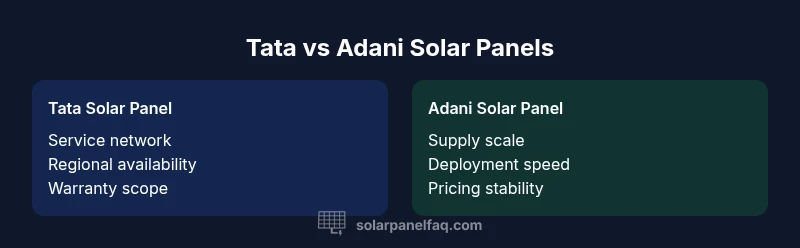
In a tata vs adani solar panel which is better debate, there is no universal winner. The right choice depends on your priorities—upfront cost, warranty terms, service availability, and local installer quality. This guide compares Tata's service footprint with Adani's supply scale to help homeowners pick the best option for their roof.
Market Landscape and Brand Positioning
According to Solar Panel FAQ, Tata and Adani have become two of the most influential brands in residential solar in India, each leveraging a broad corporate ecosystem to push rooftop adoption. The question 'tata vs adani solar panel which is better' reflects a practical decision rather than a marketing slogan, because the best option depends on local context, installer network, and after-sales service quality. Tata Power Solar and the broader Tata group bring a diversified energy portfolio, which can translate into strong warranty support and a large service footprint. Adani, with its energy-scale objectives, emphasizes supply stability, rapid deployment, and competitive pricing through integrated procurement and construction capabilities. For homeowners, the functional differences often center on service accessibility, regional availability, and installer options more than simple panel chemistry. The following sections unpack these dimensions and offer a framework to compare the two brands beyond glossy brochures. The intent is to equip readers with a practical decision framework aligned with real-world installation conditions, rather than abstract performance claims. Throughout, we avoid hype and focus on evidence-based considerations that influence long-term value.
Key Differentiators Between Tata and Adani Panels
Tata and Adani each bring distinct strengths to the table that can influence the perceived value of their panels. One practical approach is to map the differences against homeowner priorities such as installation ease, service reliability, and long-term costs. Tata often emphasizes a broad corporate ecosystem, which can translate into a deep service network and established warranty pathways. Adani, by contrast, leverages scale to support supply consistency and rapid deployment, which can matter in fast-moving projects or regions with high demand. When evaluating technology, most models from both brands use modern mono-crystalline cells with PERC design, which balances efficiency and cost. However, the exact glass, frame design, and anti-reflective coatings may vary by product line and regional supplier partnerships. The best choice depends on how these elements align with your roof type, climate, and installer capabilities. Consider the trade-offs between regional availability, installer expertise, and the level of post-installation support offered by each brand.
Warranties, Certifications, and Longevity
Warranty coverage and third-party certifications shape the long-term value of a solar panel. Tata and Adani generally offer comprehensive product and performance warranties, with regional variations reflecting local regulatory environments and distribution channels. Look for IEC certification and any country-specific approvals, as these indicate adherence to minimum safety and durability standards. In practice, a robust warranty that spans both product defects and generation performance can reduce unforeseen maintenance costs later. Certification programs and performance testing are more important than marketing claims when evaluating how a panel holds up over time in your specific climate. Always confirm the exact terms with the installer, as transferability and conditions can differ across regions and project sizes.
Performance in Different Climates and Roof Orientations
Performance is not only about peak efficiency; it's also about how a panel responds to heat, humidity, and dust—conditions that vary by geography. In hot climates, some panels lose more nominal output due to efficiency derating, while others maintain a steadier performance through advanced cell architecture and coatings. In dusty environments, glass coatings and frame sealing play a larger role in long-term reliability. Both Tata and Adani panels benefit from careful orientation and professional installation to maximize performance: the choice between brands may hinge on which product lines offer better performance under local weather patterns, and whether maintenance and cleaning schedules are easier to execute. The practical takeaway is to pair the panel choice with a climate-aware installation plan and a trusted local installer.
Availability, Supply Chain, and Service Network
Supply stability can influence project timelines and long-term upkeep. Adani’s scale can translate into assured supply for larger installations, while Tata’s established service network can offer more predictable post-installation support in some regions. Availability of specific models often depends on the local distribution partners, warehouse stock, and installer networks. A broader service footprint reduces downtime for maintenance and enables quicker warranty claims processing. For homeowners, the key factor is access to a nearby service partner who understands the chosen brand’s model lineup and has a track record of timely repairs and part replacement.
Cost Considerations: Upfront vs Long-Term Value
Pricing in residential solar is influenced by panel quality, installation complexity, and regional competition among installers. Tata and Adani panels can sit in similar price bands in many markets, but the final cost is strongly affected by channel partners, incentive programs, and the broader project scope. When evaluating cost, consider not just the sticker price of the panel but also installation labor, expected energy production, maintenance needs, and warranty terms. The long-term value rests on reliability, service availability, and the potential for price stability over the system’s lifetime. A careful comparison of quotes from multiple installers is essential to avoid region-specific pricing distortions.
Product Range, Certifications, and Compatibility
Both brands offer a portfolio of models designed for residential rooftops, with varying power classes and mounting configurations. Check for product datasheets to understand cell technology, coatings, and frame materials, and confirm compatibility with existing inverters and mounting hardware. Certifications should align with local electrical codes and safety standards, ensuring seamless integration with your home’s electrical system. Brand alignment with your installer can simplify logistics and after-sales support, reducing the risk of mismatches between panels, inverters, and mounting kits.
Installation and Roof Compatibility Considerations
Roof type, slope, and orientation determine how much energy your system can generate. Both Tata and Adani panels are designed for standard residential rooftops, but some models may be better suited to certain roof types or mounting approaches. A thorough roof assessment before purchase helps prevent surprises during installation. Consider factors like roof penetrations, shading from nearby structures, and local building codes. A competent installer will propose a layout that minimizes shading, optimizes tilt, and ensures proper ventilation for panel cooling, which in turn protects performance and longevity.
Decision Framework: Practical Checklist for Tata vs Adani
To decide between Tata and Adani panels, use a practical, data-informed checklist. Start with regional availability and installer fit, then compare warranties and post-installation support. Evaluate price quotes not only for the panels but also for the entire system, including inverters and mounting hardware. Review each brand’s product range to ensure model compatibility with your inverter and battery storage goals, if any. Finally, request evidence from local installers about real-world performance in your climate, as lab specs may not fully reflect field results.
Comparison
| Feature | Tata Solar Panel | Adani Solar Panel |
|---|---|---|
| Technology & Cell Type | Mono-crystalline with PERC design; typical residential models | Mono-crystalline with PERC design; emphasis on integrated system efficiency |
| Warranty Philosophy | Regionally variable product and performance warranties; strong regional service ties | Broad coverage with focus on supply chain and deployment scalability |
| Availability & Service Network | Deep domestic service network; established installer partnerships | Extensive supply chain with nationwide deployment capabilities |
| Brand Ecosystem & Synergy | Part of Tata Group with cross-portfolio energy solutions | Part of Adani Group with integrated energy and infrastructure platforms |
| Best Use Case | Homes prioritizing service access and local support | Homes prioritizing supply stability and scale |
| Cost Context | Value driven by installer networks and regional pricing | Value driven by procurement scale and project size |
Strengths
- Strong warranty coverage and regional service networks
- Extensive installer and partner ecosystems
- Solid long-term value through corporate stability
- Competitive access to large-scale supply chains
Drawbacks
- Regional variations in product lines can cause confusion
- Price and availability depend on local channel and installer quality
- Brand-specific changes in policy or supply can affect timelines
No universal winner; Tata excels in service breadth, Adani in scale and supply stability.
Choose Tata if you value service reach and local support; choose Adani if you prioritize supply stability and cost consistency through scale. Ground your decision in local installer feedback and region-specific availability.
Frequently Asked Questions
What factors determine which brand is better for my home?
Identify your priorities: warranty terms, service network, supply stability, and installer quality. Compare model lineups and check local installation histories to see which brand demonstrates stronger real-world performance in your climate.
Identify your priorities like warranty, service availability, and reliable supply. Check local installer histories to see which brand performs better in your climate.
Are Tata panels more widely available than Adani panels?
Availability varies by region and distributor agreements. Both brands have strong Indian market presence, with expanding international reach depending on partnerships and local demand. Contact local installers to confirm current stock and lead times.
Availability depends on your region. Check with local installers for current stock and lead times.
Can I mix panels from Tata and Adani in the same system?
Technically possible, but it requires careful matching of electrical characteristics and inverter compatibility. Mixing brands can complicate warranty claims and performance optimization, so consult a qualified installer before proceeding.
You can mix brands, but it requires matching electrical specs and may complicate warranties. Talk to an installer first.
What certifications should I look for when evaluating these brands?
Look for IEC-based certifications and local regulatory approvals. Certifications indicate adherence to safety, quality, and performance standards beyond marketing claims. Verify datasheets and third-party test results with your installer.
Check IEC certifications and local approvals; review datasheets and third-party tests with your installer.
Do Tata and Adani panels differ for residential vs commercial installations?
Both brands offer residential lines suitable for rooftops and have products relevant to commercial use. The main differences typically involve scale, certification scope, and project integration capabilities rather than a strict split along residential/commercial lines.
Both brands cater to homes and businesses; differences are usually in project scale and integration needs.
Top Takeaways
- Assess your local installer network for each brand
- Prioritize warranty scope and service response times
- Evaluate supply stability and regional availability
- Consider total system value over the lifetime
- Verify certifications and roof compatibility