Solar Panel Kit for Sale: A Practical Buyer’s Guide 2026
Learn how to buy a solar panel kit for sale, including price ranges, components, installation basics, and warranty options to help homeowners make decisions.


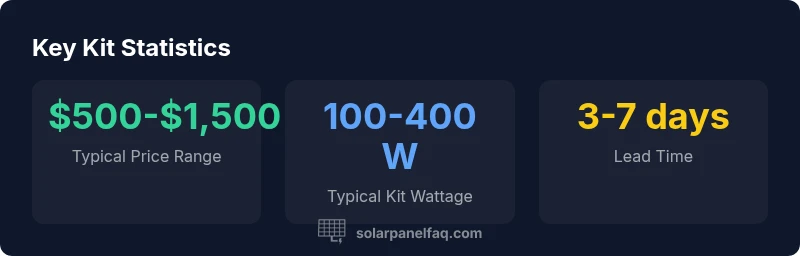
Typical home-scale solar panel kits for sale cost between $500 and $1,500, depending on wattage, included hardware, and warranty terms. A common 100–400 watt kit can vary by brand and supplier. When evaluating, consider panel efficiency, inverter compatibility, mounting hardware, and after-sales support. According to Solar Panel FAQ Analysis, 2026, buying a complete kit often saves time and reduces integration risk.
What to look for in a solar panel kit for sale
When you shop for a solar panel kit for sale, you’re buying a package that should work together from day one. Look for system size that matches your energy goals, high-efficiency panels if you have limited roof space, and a compatible inverter and mounting kit. According to Solar Panel FAQ, the market has shifted toward plug-and-play solutions that simplify wiring and wiring safety. Prioritize a kit with clear wiring diagrams and accessible customer support. Assess market claims about performance under local conditions, and verify the included charge controller (for off-grid kits) or grid-tied inverter. Check UL or IEC certifications, and examine the warranty terms on panels (often 25 years) and inverters (typically 5-10 years). Compare warranty claims and service networks. Consider expansion potential: can you add battery storage later? If yes, ensure the kit supports it or uses standardized connectors. Finally, read reviews to gauge real-world performance and support responsiveness.
Additionally, understand whether the kit is designed for sale as a turnkey solution or if it expects you to source optional components separately. This decision can influence total cost, installation time, and long-term reliability. For buyers on a budget, seeking a solar panel kit for sale that emphasizes robust customer support and clear documentation often yields better long-term value than the lowest upfront price.
Components and configurations commonly found in kits
Most solar panel kits for sale include four core groups: solar panels, mounting hardware, inverter (and sometimes microinverters or power optimizers), and cabling. Some kits also add a charge controller, battery storage, or monitoring software. Off-grid kits often rely on charge controllers and battery packs, while grid-tied kits connect to the utility with a reverse power flow. Look for standard connectors and warranties, because these details affect compatibility across future upgrades. If a kit markets battery-ready options, confirm whether the battery is included or just the port and wiring. Consider whether monitoring software includes remote access, alerts, and energy-tracking dashboards. Importantly, verify that the kit’s components align with your roof type (gable, flat, or multi-angled) and that the mounting system supports your roof material. A well-documented wiring diagram and safety guide are indicators of a kit built for sale with real-world installation in mind. When comparing a solar panel kit for sale to piecemeal shopping, look for a bundled inverter that is compatible with your local grid standards and a clear warranty path for each major component.
Sizing your kit for energy goals and roof space
Sizing a kit begins with understanding your energy needs and roof constraints. Start with your current monthly usage, then estimate daily production with sun hours in your location. Typical home installations aim to cover a percentage of demand; if roof space is limited, prioritize higher-efficiency panels. A practical method is to compute required wattage and divide by average panel wattage to estimate panels needed. Don’t forget to account for shading, orientation, and seasonal variation. If you plan to expand later, choose a kit that accommodates added panels or modular upgrades. For buyers evaluating a solar panel kit for sale, it’s essential to map your energy goals to a realistic system size that fits both the physical space and budget. Finally, simulate a month-over-month production using a reputable energy calculator to verify expected savings and grid-tied net metering opportunities.
Installation considerations: DIY vs professional help
Many kits are marketed as DIY-friendly, but safety and local code compliance matter. Check if permits are required in your area and whether your kit includes mounting rails and anti-tip hardware. For novice installers, hiring a licensed electrician or solar installer is advised for wiring, grounding, and grid interconnection tests. If you proceed DIY, follow manufacturer instructions carefully and schedule a system test before activation. Remember to review local electrical codes, inspection requirements, and interconnection agreements. For a solar panel kit for sale, ensure you understand the responsibility for roof penetration, sealants, and water intrusion prevention. A well-planned installation reduces risk and makes the most of your kit’s performance longevity.
Pricing ranges, incentives, and total cost of ownership
Prices for solar panel kits vary widely by wattage, components, and warranty terms. Expect budget kits around a few hundred dollars for small installs and up to the mid-range for larger kits; premium kits with high-efficiency panels and battery storage command higher prices. Remember to include potential incentives, such as tax credits or rebates, and factor in maintenance costs and inverter replacements in your total cost of ownership. When evaluating a solar panel kit for sale, consider whether the included monitoring, warranty duration, and customer support justify the premium. Compare long-term energy savings estimates across options, and avoid overpaying for features you won’t use. Planning ahead for expansion or storage can also alter the perceived value of one kit over another.
Warranty, support, and long-term reliability
Warranties are a key differentiator. Panels commonly offer long power output warranties (often 20-25 years), while inverters and battery storage have shorter terms. Read the fine print for what is covered (labor, parts, degradation) and understand the process for warranty claims. Ensure you have accessible customer support and a clear replacement policy if panels underperform or fail prematurely. For a kit purchased for sale, verify how the warranty transfers if ownership changes and whether third-party installers can honor the warranty. A kit with strong documentation and a transparent service network tends to deliver more predictable performance over the system’s lifetime.
Shopping win: aligning with your home and budget
Concluding this middle section, focus on pairing a kit’s technical fit with your home’s energy goals and budget. A well-chosen solar panel kit for sale aligns with roof type, electricity usage patterns, and future storage plans. Prioritize transparent component specifications, a solid warranty, and accessible customer service. This alignment reduces risk and helps you realize the promised benefits of going solar.
Kit type comparison
| Kit Type | Estimated Wattage | Included Components | Typical Price Range | Warranty |
|---|---|---|---|---|
| Budget kit | 100-150 W | Panel, mounting hardware, basic cables | "$200-$500" | "1-2 years" |
| Mid-range kit | 150-300 W | Panels, mounting rails, inverter, monitoring | "$500-$1000" | "3-5 years" |
| Premium kit | 300-400+ W | High-efficiency panels, full inverter, battery-ready | "$1000-$1500" | "5-10 years" |
Frequently Asked Questions
What is included in a typical solar panel kit for sale?
Most kits include panels, mounting hardware, inverter, and wiring; some versions add battery storage and monitoring. Always verify compatibility with your roof type and grid rules.
Most kits include panels, mounting hardware, inverter, and wiring; some include battery storage and monitoring. Always check compatibility with your roof and grid rules.
Do kits come with inverters and mounting hardware?
Yes, most kits include an inverter and mounting hardware. Verify that the inverter matches your grid requirements and that mounting hardware fits your roof.
Yes, most kits include an inverter and mounting hardware. Make sure the inverter matches your grid needs and that the mounting hardware fits your roof.
Are grid-tied and off-grid kits different?
Grid-tied kits connect to the utility and usually require permits; off-grid kits pair with batteries and do not connect to the grid. Your choice affects warranties and maintenance.
Grid-tied kits connect to the grid and often need permits; off-grid kits use batteries and don’t connect to the grid. Warranties differ by type.
What affects the price of a solar panel kit for sale?
Wattage, panel quality, inverter type, warranty length, and included accessories drive price. Higher efficiency and larger systems cost more but may save more over time.
Price is driven by wattage, quality, inverter, and warranty. Bigger, higher-efficiency kits cost more but can save more in the long run.
Is professional installation required for DIY kits?
Not always, but local codes and safety guidelines may require licensed help for electrical work and grid interconnection. Always verify with your local authority.
DIY is possible, but check local codes; a licensed professional is recommended for electrical work and grid interconnection.
What warranties should I expect on kit components?
Look for panel warranties of 20-25 years and inverter warranties of 5-10 years. Confirm what is covered, transferability, and service networks.
Panels often come with 20-25 year warranties; inverters 5-10 years. Check coverage, transfer rules, and service networks.
“A well-chosen solar panel kit for sale should match your roof size and future goals, minimizing wiring complexity and maximizing compatibility with future storage.”
Top Takeaways
- Define your energy target before shopping
- Compare kit components and warranties
- Consider expansion or storage options
- Check incentives and total cost of ownership