Solar Panel Auction Guide: Bid Smart and Save (2026)
A practical guide to solar panel auctions: how bidding works, how to compare bids, and how to avoid scams. Ideal for homeowners and buyers seeking value and solid warranties.


In this guide, you will learn how to participate in a solar panel auction, how to compare bids, and how to verify warranties, delivery terms, and post-sale support. We cover common auction formats, red flags, and steps to prepare your bid. According to Solar Panel FAQ, auctions can yield competitive pricing when you assess total landed cost and post-sale support.
What is a solar panel auction and why participate?
Solar panel auctions are procurement events where buyers bid on solar panel packages from multiple suppliers. They can be organized by utilities, municipalities, schools, or private homeowners through online platforms. Auctions create price transparency by exposing competing quotes, and they can help you access a broader range of panel types, warranties, and delivery options than a standard direct purchase. According to Solar Panel FAQ, auctions can drive more competitive pricing and faster fulfillment when buyers come prepared with clear specifications and a firm decision timeline. Before you participate, define your must-haves (panel type, efficiency, warranty length) and your deal-breakers (installation support, local service coverage). Understand that bids reflect not only price but also terms like lead time, warranty coverage, installation support, and after-sales service. The best strategy is to want a strong landed cost calculation, which includes shipping, taxes, and potential rebates. For many homeowners, auctions are not just about the lowest dollar bid, but the best combination of price, performance, and reliability.
Auction formats you’ll encounter
There are several common auction formats used for solar panels. Sealed-bid auctions require bidders to submit their best price by a deadline, with all bids opened together at once. Live or online-accelerated auctions allow bidders to see rival offers in real time and adjust bids on the fly. Dutch-style auctions start with a high price that drops until a bidder accepts; these are less common for solar panels but can appear for special configurations. Some platforms use tiered bidding, where early bidders secure access to certain inventory and later bids compete for remaining stock. The core advantage of these formats is that they create competition, which can drive down the landed cost, especially when the auction includes multiple panel brands, frame types, and efficiency ratings. If you’re new to auctions, practice on test listings, review the terms of sale for each lot, and note the bid increments. Also, verify who bears shipping and installation responsibilities, as these costs can swing the overall value of a winning bid.
Before you bid: essential terms and checks
Before bidding, you should understand key terms that frequently appear in auction documents. The reserve price is the minimum amount the seller will accept; bids below this level may be rejected. A buyer’s premium or auction fee can add to the landed cost. Delivery terms specify who bears shipping costs, risk of loss, and whether installation is included. Warranties on solar panels (and inverters) vary by brand and supplier, so confirm coverage duration, transferability, and service response times. Review the contractor or installer requirements, and whether on-site evaluation or system design assistance is included. Clarify post-sale support, return policies, and how defects are handled. Knowing these terms helps you calculate true total cost and avoid surprises after you win.
How to prepare your bid budget and prequalification
Preparation is the backbone of a successful auction experience. Start by setting a firm landed-cost ceiling that includes the panel price, shipping, taxes, installation, and any permit fees. Gather prequalification materials if required by the platform (proof of address, business license, financial references). Create a short list of acceptable panel types (monocrystalline vs. polycrystalline, efficiency targets, and frame material) and align this with your home’s roof orientation and shading. Determine your decision criteria beyond price—warranty length, service coverage, and supplier reliability matter just as much as the bid amount. Practice submitting mock bids on test listings to become comfortable with the interface, bid increments, and withdrawal rules.
How to evaluate bids beyond price
When bids arrive, don’t stop at the sticker price. Compare landed costs by considering delivery times, lead times, and installation support. Check panel efficiency and temperature tolerance, as higher efficiency can translate to greater energy production over the system’s life. Assess warranty terms for both the panels and the installation work, including what happens if a component fails and how service calls are billed. Consider the supplier’s track record for on-time delivery and post-purchase support. If multiple bids are close on price, favor the option with stronger warranties, better logistics, and transparent contract terms. A cheaper bid that lacks after-sales service can end up costing more in the long run.
Risks and red flags to avoid
Beware of auctions with opaque terms, unclear who ships, or demands non-refundable deposits before any inspection. Extremely low bid prices can mask expensive add-ons or restricted warranty coverage. Avoid bids from suppliers who cannot provide verifiable references or local service coverage. Ambiguous delivery windows, vague installation responsibilities, and missing permit support are warning signs. Ensure you understand all tax and regulatory compliance requirements, and confirm that the winning bid will meet your state or locality’s electrical codes. If something feels off, pause and request clarifications before committing.
Real-world scenarios and lessons
In practice, homeowners who prepared a detailed specification sheet and verified the winning bidder’s service footprint tended to secure more reliable outcomes. One common lesson is to map out a two-bid plan: a primary bid with a preferred supplier and a backup bid from another reputable company. This strategy helps ensure you have a viable remaining option if a preferred supplier cannot meet a delivery window or warranty condition. Another takeaway is to run a post-auction calculation that factors in potential rebates, incentives, and the cost of potential retrofits to accommodate different inverter models. By focusing on landed cost and reliability, buyers often walk away satisfied with performance and long-term support.
Step-by-step journey: your bid journey overview
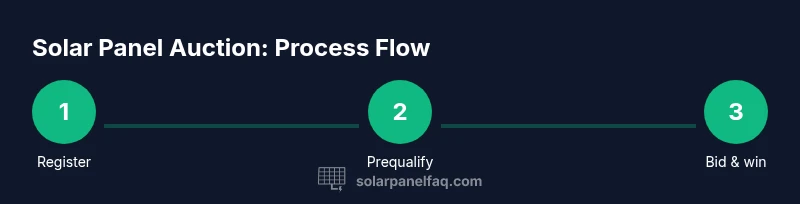
Registration and account setup → Prequalification and spec finalization → Bid submission and monitoring → Bid evaluation and negotiation → Auction close and contract signing → Delivery, installation, and commissioning. This flow emphasizes preparation, informed decision-making, and clear post-sale processes. The Solar Panel FAQ team’s guidance emphasizes prioritizing total cost and ongoing support rather than chasing the lowest price alone.
Next steps after winning an auction
After winning, promptly review the contract, confirm the delivery window, and arrange for installation with the winning bidder if included. Ensure permits and interconnection paperwork are prepared and filed on time. Schedule a pre-installation site assessment if required, and coordinate with your utility for net-metering arrangements. Finally, keep a detailed record of all documents and communications for future warranty and maintenance needs. The Solar Panel FAQ team recommends documenting every step to protect your investment and ensure smooth post-sale support.
Tools & Materials
- Computer or smartphone with internet access(Must support the auction platform and secure connections)
- Active registration for the auction platform(Complete verification before listing closes)
- Documentation for prequalification(Proof of address, license, or financial references)
- Clear budget and decision criteria(Set max landed-cost and preferred panel types)
- Panel specifications and supplier warranty sheets(Helpful for comparison but not always required)
- Delivery/installation plan(Prepare for on-site logistics if included)
Steps
Estimated time: 60-120 minutes
- 1
Register for the auction platform
Create your account, verify identity, and enable two-factor authentication. Understand the bidding interface and review the auction rules before the listing goes live.
Tip: Enable notifications for bid activity and reserve price changes. - 2
Prequalify suppliers and products
Shortlist vendors with solid warranties and service networks. Request spec sheets and confirm compatibility with your roof and inverter.
Tip: Ask for installed-case references and average lead times. - 3
Review terms and warranties
Check panel warranty length, transferability, and what's covered under installation. Confirm who bears shipping and handling if issues arise.
Tip: Document any deviations from standard warranties in writing. - 4
Set your bid strategy and budget
Define your max landed cost, including shipping and installation. Decide whether to use auto-bid and how to respond to competing offers.
Tip: Stick to your budget; pre-set auto-bid limits help avoid overspending. - 5
Place bids and monitor the auction
Submit your bids before the deadline and monitor live activity. Be mindful of bid increments and reserve price status.
Tip: Avoid last-second rushing; confirm bid confirmations in writing. - 6
Finalize purchase and plan delivery
After winning, review contract details, schedule delivery, and prepare for installation. Ensure all permits and interconnection steps are planned.
Tip: Create a checklist for permits, interconnection, and site readiness.
Frequently Asked Questions
What is a solar panel auction?
A solar panel auction is a procurement event where multiple suppliers bid to win a contract for supplying panels. Buyers compare bids based on price, warranty, delivery terms, and post-sale support. Auctions can help reveal market prices and increase competition.
A solar panel auction is where buyers bid against suppliers to win a panel contract. You compare bids on price and service to get a good deal.
What formats do solar panel auctions use?
Common formats include sealed-bid, live/online bidding, and sometimes Dutch-style auctions. Each format has different timing and disclosure rules, affecting how you bid and how quickly you receive the product.
Formats include sealed-bid and live bidding; each has different timing and disclosure rules.
How can I protect myself from scams?
Research suppliers, require verifiable warranties, and ensure clear delivery and installation terms. Avoid deposits before inspection and avoid opaque terms or vague references to ‘special discounts’.
Always verify warranties and delivery terms, and avoid unclear deals or upfront deposits before inspection.
What costs should I consider beyond the bid?
Include shipping, installation, permits, interconnection, taxes, and potential inverter or system design costs when calculating total landed cost.
Add shipping, installation, permits, and taxes to the bid to understand the true cost.
How long does the bidding process take?
Duration varies by auction format and inventory, but you should plan for prequalification, bidding windows, and post‑auction contract processing.
Bidding times vary, so plan for prequalification, bidding, and post-auction steps.
Should I negotiate after the auction closes?
Yes, clarify delivery timelines, warranty details, and any installation services before signing the contract. Negotiation can improve terms without increasing price.
Yes, confirm delivery, warranty, and installation details before signing.
Is a solar panel auction right for residential buyers?
Residential buyers can benefit if they have clear specs and a firm budget. Auctions work best when buyers understand landed costs and post-sale support.
They can be beneficial for clear specs and strict budgets, with attention to total cost.
Watch Video
Top Takeaways
- Define landed-cost and prequalification before bidding.
- Evaluate offers on cost, warranty, and service, not just price.
- Verify delivery, installation, and permits early in the process.
- Document all terms and keep transaction records.