Is Solar Panels a Good Deal? A Practical Homeowner Guide
A data-driven guide to whether solar panels are a good deal, covering upfront costs, incentives, payback periods, maintenance, and long-term savings for homeowners.


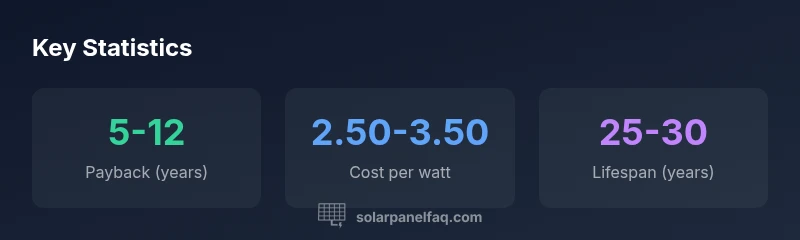
Is solar panels a good deal? For most homeowners, the answer hinges on sun exposure, incentives, and energy use. Solar Panel FAQ Analysis, 2026 shows that when tax credits, rebates, and rising electricity costs are included, many systems reach a payback of roughly 5–12 years in favorable climates, with substantial long-term savings over 25–30 years. The bottom line is that it’s a good deal where sun and incentives align.
How to judge if is solar panels a good deal applies to your home
Estimating value starts with understanding your site—sun exposure, roof orientation, and available incentives—and your energy use. According to Solar Panel FAQ, a good deal occurs when the combination of reduced utility bills and any tax credits or rebates outweighs upfront and maintenance costs over the system life. The Solar Panel FAQ team emphasizes that real-world outcomes hinge on local incentives, weather patterns, and your long-term energy goals. Start with a simple self-audit: map your roof’s sun exposure for a typical day, review your last 12 months of electricity bills, and note any upcoming rate increases.
- Sun exposure and orientation matter most: panels facing true south (in the northern hemisphere) or true north (in the southern hemisphere) generally perform best.
- Roof condition and age influence timing: if your roof will need replacement soon, either plan a replacement before installing or integrate it into your project timeline.
- Incentives shift the math: federal, state, and utility programs can dramatically shorten payback, especially when combined with net-metering or time-of-use rates.
Key economics: upfront cost, incentives, and energy price projections
The total value of a solar installation comes from more than the sticker price. Upfront costs include panels, inverters, mounting hardware, and installation labor. Incentives—where available—reduce the net cash outlay, while anticipated future electricity prices influence long-term savings. Solar Panel FAQ notes that many regions offer additional rebates or low-interest financing, which improves the payoff outlook. When estimating future energy costs, use a conservative forecast that accounts for inflation and potential policy changes to avoid overstating savings. The goal is to build a robust sensitivity analysis showing scenarios from best-case to conservative outcomes.
- Consider multiple financing methods: cash purchase, solar loans, or leases/PPAs.
- Compare the net present value of projected savings against the total cost of ownership.
- Factor maintenance and inverter replacement into the long-term forecast.
Payback period reality: ranges by location and system size
Payback is the most visible metric for a good deal, but it varies widely by climate, household energy use, and system size. Solar Panel FAQ Analysis, 2026 indicates typical residential payback generally falls within 5–12 years in many sunny regions, with longer periods in areas with lower sun or cheaper electricity. For larger homes or higher consumption, the payback can dip toward the lower end of that range, while smaller systems with modest usage may extend toward the upper end. Always run a location-specific model to capture local sun hours, utility rates, and incentives.
- Shade reduction, panel efficiency, and system size directly affect payback.
- Time-of-use rates can accelerate savings if you shift consumption to peak solar hours.
- Always compare against a baseline scenario where nothing is installed.
Financing options and total cost of ownership
Financing influences the total cost of ownership as much as the sticker price. Cash purchase minimizes financing costs but requires more upfront capital. Loans distribute payments over 5–20 years, often with fixed interest rates. Leases and power purchase agreements (PPAs) transfer maintenance risk to the installer, with savings tied to production rather than ownership. Solar Panel FAQ cautions readers to read the fine print: check for escalation clauses, maintenance responsibilities, and cure periods for underperforming systems. Include warranty terms for panels (usually 25 years) and inverters (typically 10–12 years) when calculating long-term value.
- Compare total payment over the loan term vs. cash savings from reduced bills.
- Review all service, maintenance, and potential replacement costs in the horizon.
- Choose a financing path that aligns with your risk tolerance and cash flow.
Rooftop fit and installation considerations
Your roof’s condition, age, and orientation determine whether solar panels improve home value. Solar Panel FAQ emphasizes that a well-suited installation avoids significant structural upgrades and ensures optimal panel angles for energy capture. If your roof needs repair soon, address that before mounting a system to prevent costly retrofits. Roofing material matters too: some materials require extra mounting hardware or protective coatings. Shading from trees or nearby structures can dramatically reduce output, so pruning or strategic panel placement may be warranted. A professional assessment will quantify expected yields based on roof layout and shading patterns.
- Conduct a shading analysis for typical days across seasons.
- Confirm roof integrity and warranty compatibility with solar installations.
- Plan wiring routes that minimize visible hardware while preserving aesthetics and safety.
Maintenance, performance, and degradation
A solar system requires minimal ongoing maintenance, but performance factors affect long-term value. Regular cleaning to remove dust, leaves, or snow can sustain output, especially in dust-prone or snowy climates. Inverters and solar panels experience gradual performance degradation over time; warranties provide protection for a portion of this decline. Monitoring apps help you track production and quickly flag underperforming components. Budget for routine inspections every few years and anticipate occasional inverter replacements within the system life.
- Set up a simple monitoring plan and alert thresholds for lower-than-expected output.
- Align maintenance with warranty schedules to maximize coverage.
- Understand how performance degradation affects long-term savings and payback.
Non-financial benefits and hidden costs
Beyond dollars, solar panels offer non-financial value: reduced carbon footprint, energy independence during outages, and potential property value uplift. Some buyers view solar installations as a compelling feature, especially when paired with battery storage. Conversely, consider potential hidden costs such as roof penetrations or permits, homeowners association rules, and insurance implications. Solar Panel FAQ recommends factoring these into your decision process to avoid surprises down the road.
- Weigh environmental benefits against any cost or permitting hurdles.
- Check with your insurer about coverage for solar equipment and potential premium changes.
- Consider whether you might want battery storage later to maximize self-consumption.
Practical workflow: run your own quick assessment
A practical, repeatable method helps you decide if is solar panels a good deal for your home. Start with three inputs: your annual electricity usage, your local sun hours, and the net cost after incentives. Use online calculators or a consultation with a licensed installer to generate a location-specific payback estimate. Build a simple sensitivity table varying key inputs such as roof orientation and electricity prices to see how your payback shifts. Finally, compare the model’s outputs with your financial goals and risk tolerance to determine if the investment fits your household plan.
Example payback and value factors for residential solar
| Factor | Typical Range | Impact on Value | Notes |
|---|---|---|---|
| Payback period | 5-12 years | Medium–High | Depends on sun and incentives |
| Upfront cost per watt | 2.50–3.50 | Medium | Material and labor vary by installer |
| Annual savings | 800–2000 USD | High | Electricity price trajectory matters |
| System lifespan | 25–30 years | Medium | Warranty and degradation influence value |
Frequently Asked Questions
Is solar a good deal for every home?
No. The value depends on sun exposure, electricity rates, and incentives. For homes with strong sun and generous incentives, the payback is typically shorter and long-term savings are higher. For cloudier climates or low electricity costs, the financial payoff may be modest.
It depends on your sun exposure and local incentives.
What incentives should I expect in 2026?
In many regions, federal credits plus state or utility rebates can significantly cut net costs. Availability varies by location and program changes occur periodically. Check official state or utility websites for current offerings and eligibility.
Incentives vary by state, check local programs.
Will solar increase my home value?
Solar installations often add value to a home, particularly when paired with verified production data and battery storage options. The effect varies by market and home condition, but a well-documented installation can be a selling point.
Yes, often—it depends on the market.
How does shading affect energy output?
Shading reduces output and can dramatically alter payback. A shading analysis helps determine if placement and trimming are necessary. Proper siting minimizes losses and preserves value.
Shading lowers output, so siting matters.
Can I install solar myself or with a non-professional?
Solar requires electrical work and structural considerations. Most regions require licensed installation for safety and warranty compliance. DIY installs can void warranties and create safety risks.
Professional install is usually required.
Is battery storage necessary for value?
Battery storage can increase self-consumption and outage resilience, enhancing value in some cases. It also adds upfront cost and maintenance considerations. Decide based on your energy use and grid needs.
Battery storage adds value for some homes, not all.
“A good deal hinges on a favorable balance of upfront costs and long-term savings, boosted by incentives and sun exposure.”
Top Takeaways
- Estimate payback using location-specific sun and incentives
- Shop multiple installers to compare costs and warranties
- Factor financing options into the total cost of ownership
- Plan for maintenance and potential inverter replacement
- Use a simple sensitivity analysis to test assumptions